
Restaurant floors need more than nightly mopping. Grease, food residue and moisture work into tile, grout and concrete, and a mop pushes that film around instead of removing it. A scheduled deep clean, done by a commercial crew after close, resets the floor so daily cleaning can hold it.
Before you hire a commercial floor care contractor, check three things: that they work on commercial floors only, that they can work at night and on weekends, and that they will walk each area of your restaurant before they name a method.
Restaurant floors by area
A restaurant is not one floor. Each area takes a different kind of wear, so each needs a different method. A good restaurant floor care program treats them separately.
Kitchen quarry tile and grout
Kitchen floors take grease, steam, spills and constant foot traffic. Quarry tile is porous in the grout lines, and that is where grease and dirt settle first.
Deep cleaning lifts the film out of the grout, and a sealer afterward makes the next cleaning easier. See our work on ceramic tile and grout cleaning for how this works.
Dining room floors
Dining rooms may have tile, VCT, sealed concrete or wood-look finishes. Guests see this floor, so appearance matters as much as cleanliness. Dull traffic lanes, scuffs near tables and dark seams show up first.
Finished floors such as VCT can be stripped and refinished on a schedule. Our commercial VCT strip and wax service covers that work.
Entrances
The entrance takes the most outside dirt, and in wet weather it takes water too. Use matting inside the door and keep it clean. Matting catches grit before it scratches the finish and keeps water off the walking path.
Restrooms
Restroom floors need cleaning that reaches the grout and the edges around fixtures, where odor and buildup start. Daily mopping does not reach those spots. A periodic deep clean does.
Back-of-house concrete
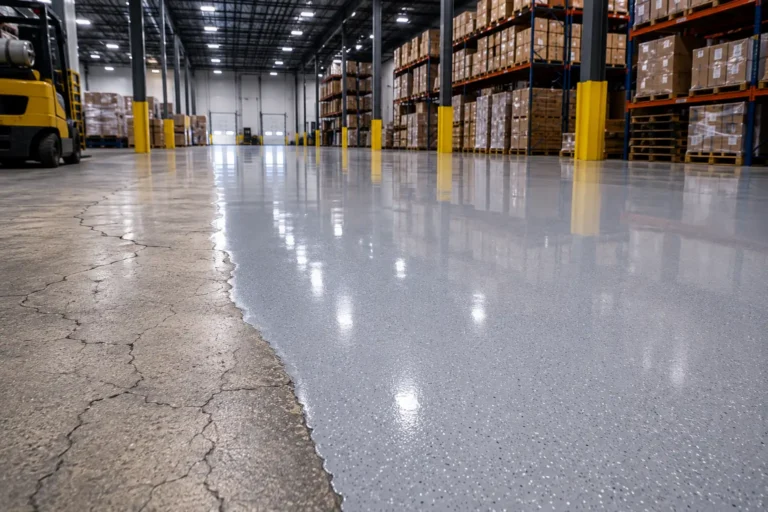
Walk-in coolers, dry storage, dish areas and receiving docks often have bare or sealed concrete. This floor takes carts, spills and cleaning chemicals.
Match the method to the surface. Sealed concrete needs different care than bare concrete, and a contractor should tell the two apart before work begins.
Grease and traction underfoot
Most slippery restaurant floors have one cause: a film that was never fully removed. Grease, soap residue and floor cleaner left on the surface make tile feel slick even when it looks clean. No floor is slip-proof, but you control what sits on top of it.
Four practical habits help. Use a degreaser made for kitchens, not a general cleaner. Rinse the floor completely so no residue stays behind.
Put matting where staff stand and where water collects. Choose a finish for the dining room with traction in mind, and ask your contractor about it.
If staff report that a floor feels slick after cleaning, treat it as a signal. Stop adding more cleaner. The floor likely needs a deep clean to remove the film, not another pass with the mop.
Restaurant floor polishing and refinishing
Restaurant floor polishing means different things on different floors. On concrete, it means grinding and polishing the surface to a clean, even sheen.
On VCT, it means stripping old finish and applying new finish. On tile, it usually means deep cleaning and sealing, because polishing tile is rarely the right call.
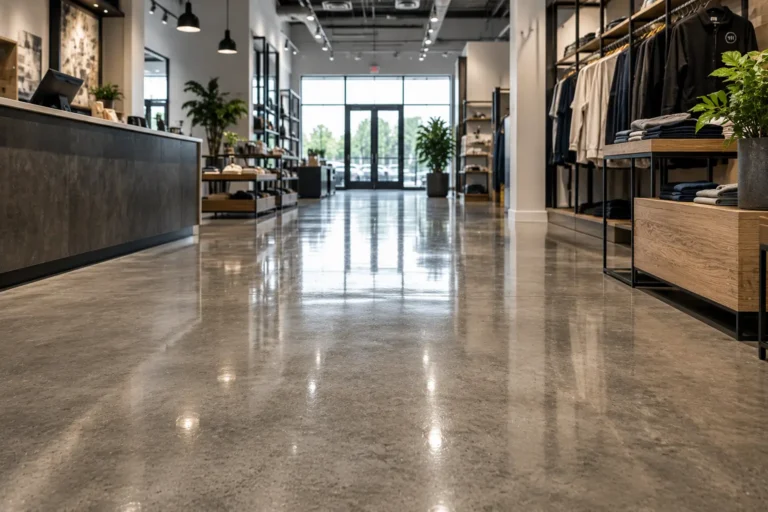
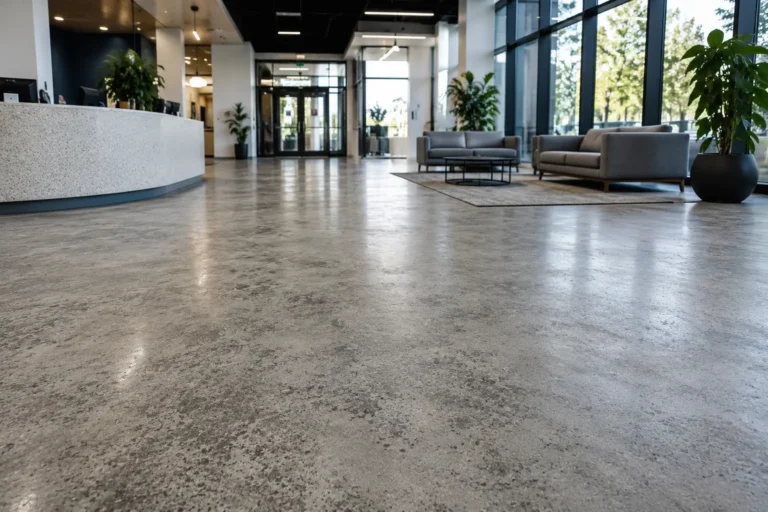
Polished concrete suits dining rooms, host stands and open kitchens that guests can see. Learn more about commercial concrete polishing before you decide.
Do not polish a floor that is still carrying a grease film. Clean it first, then finish it.
Deep cleaning versus daily cleaning
Daily cleaning is your staff’s job. Mop, degrease and rinse at close, and keep drains and corners clear. This keeps the floor safe and presentable between visits.
Deep cleaning is a contractor’s job. It uses machines and methods your staff do not have, and it removes the buildup daily cleaning leaves behind. See our commercial floor cleaning services for what that includes.
Do not try to make daily cleaning do deep cleaning’s work. Heavier chemicals and more mopping rarely fix a floor with buildup in the grout.
They add residue. Book the deep clean and let daily cleaning go back to its real job.
Scheduling after close and before prep
A restaurant has a short window when the floors are empty: after the last guest leaves and before the morning prep crew arrives. Floor work belongs in that window. Night scheduling means no lost service and no guests walking through wet areas.
Agree on the plan before the crew arrives. Confirm who unlocks the building, which areas come first, when the floor is ready for walking, and who signs off. Kitchens need the most care, because staff need to restart prep on a clean, dry floor.
For a larger project, such as refinishing the dining room, weekend scheduling can work better. Pick your slowest stretch and plan the work around it.
How to choose a restaurant floor care contractor
Use a checklist you can verify. Ask for each item and expect a direct answer.
- Commercial focus. Ask if the company works on commercial floors only. Restaurant floors are not household floors.
- Years in the business. Ask how long they have done this work, and ask for the answer in specifics.
- A site walk. A contractor who names a method without seeing your floors is guessing.
- Method by surface. Ask what they will do on kitchen tile, dining room floors and concrete, and why.
- After-hours scheduling. Ask if they work nights and weekends as a normal part of the job.
- Written scope. The quote should list areas, methods and the handover time.
- A maintenance plan. Ask what happens after the first visit and how the program keeps the result.
Be careful with any contractor who promises a floor that will never be slippery. No cleaning company can promise that. A good one will talk about residue, rinsing, matting and finish choice.
One floor care program across several locations
If you run more than one restaurant, floors drift apart. One site gets deep cleaned, another waits, and a third uses a different product. Guests notice, and so do your managers.
A single program fixes this. You set one method per surface, one schedule logic and one contact. Each location still gets its own plan, because a flagship dining room and a small counter-service unit do not wear the same way.
This works best with a contractor who covers every region you operate in. A nationwide provider means you do not need to hire and manage a new vendor in each city.
Planning the work in your building
To get a useful quote, send the floor type in each area, photos of the worst spots, approximate square footage, and the hours the space is free. Mention where the fryers, grills and dish area sit. That lets the crew plan the right method for each zone.
TCS Floors schedules work at night and on weekends, so your restaurant keeps serving guests. We build customized maintenance programs, so the result lasts past the first visit and fits how each of your locations runs.
TCS Floors is commercial only, works nationwide, and has 33+ years of experience in commercial floor care. Send us your floors and your hours, and we will plan the work around your service.
Frequently asked questions
How do you clean restaurant floors the right way?
Clean in two layers. Staff handle daily degreasing and rinsing, and a commercial contractor handles deep cleaning of tile, grout and concrete on a set schedule.
The daily work keeps the floor presentable. The deep work removes what builds up where a mop cannot reach.
How often should restaurant floors get a deep clean?
It depends on the kitchen. A heavy fryer and grill line needs deep work more often than a dining room with light traffic.
Set the schedule by what the floor shows you: grout that stays dark after mopping, a film that returns fast, or tile that feels slick after a rinse. A customized maintenance program sets the right pace for each area.
Can you polish restaurant floors?
Yes, on the right surface. Concrete can be ground and polished, and finished floors such as VCT can be stripped, sealed and refinished.
Kitchen quarry tile is usually cleaned and sealed, not polished. A contractor should look at each floor type before recommending a method.
Can restaurant floor work happen without closing the restaurant?
Usually the work happens after close and before prep, so service does not stop. Night and weekend scheduling makes that possible. For a larger project, plan it around the slowest part of your week and agree on the handover time in writing.
What should I send to get a quote for restaurant floor cleaning?
Send the floor type in each area, photos of the worst spots, the approximate square footage, and the hours the space is free. Mention the location of the fryers, grills and dish area. This lets the contractor plan the right method and crew.
Can one contractor care for floors at all of my locations?
Yes, if the contractor works nationwide. One program across your locations gives you the same method, the same schedule logic and one point of contact. TCS Floors works commercial only and nationwide, so a multi-unit operator can use one program everywhere.