
Commercial Floor Care for Different Surfaces: VCT, Concrete, Tile, and More
Not all commercial floors require the same type of care. What works for VCT will not work for concrete, and using the wrong method can lead to damage, safety issues, and higher maintenance costs.
Understanding how to properly maintain each surface helps extend floor life, reduce repairs, and keep your facility looking professional.
This guide breaks down commercial floor care by surface type so you can choose the right approach for your business.
Key Takeaways
- Different flooring types require different cleaning and maintenance methods
- VCT floors rely on waxing systems, while concrete uses sealing or polishing
- Tile and grout need specialized cleaning to prevent buildup and staining
- Using the wrong method can damage floors and increase long-term costs
- A structured maintenance program ensures consistent performance across all surfaces
Why Surface-Specific Floor Care Matters
Commercial facilities often have multiple flooring types in one space. Each surface reacts differently to traffic, moisture, and cleaning methods.
Using a generic approach can result in:
- Premature wear and surface damage
- Reduced slip resistance
- Higher maintenance costs
- Inconsistent appearance
A surface-specific strategy ensures each floor gets the right treatment.
VCT Floor Care (Vinyl Composition Tile)
VCT is one of the most common commercial flooring types and requires a structured maintenance approach.
Recommended Care:
- Strip and wax for full restoration
- Deep scrub and recoat for maintenance
- Regular burnishing to maintain shine
Why It Matters:
VCT relies on a protective wax layer. Without it, the surface wears down quickly under heavy traffic.
Concrete Floor Care
Concrete is durable but requires proper treatment to maintain performance and appearance.
Recommended Care:
- Concrete cleaning and scrubbing
- Sealing or coatings for protection
- Polishing for high-traffic environments
Important Note:
Concrete floors should not be waxed. Wax does not bond properly and can lead to peeling, buildup, and ongoing maintenance issues.
Tile and Grout Floor Care
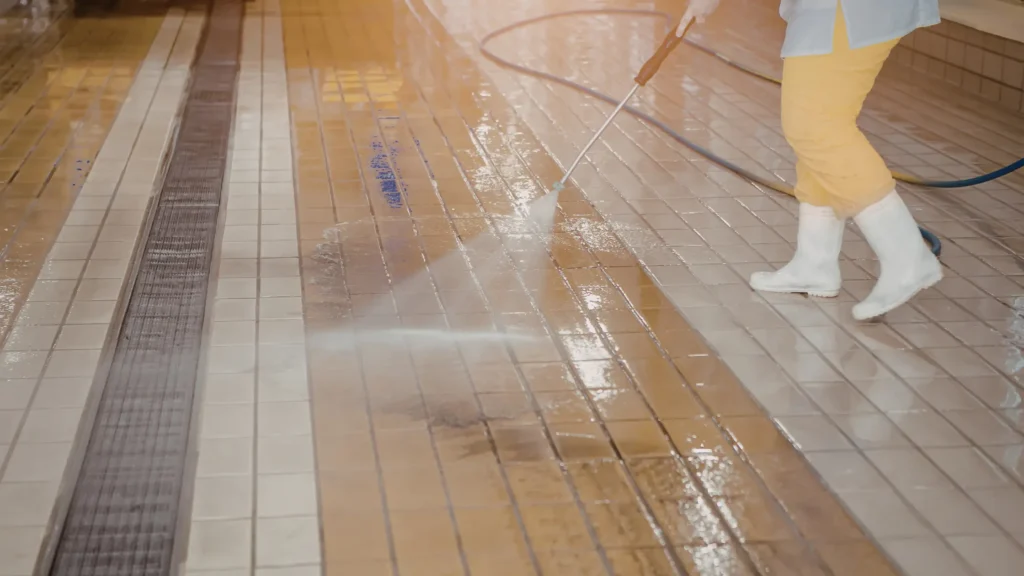
Tile floors are durable, but grout lines are prone to dirt buildup and staining.
Recommended Care:
- Deep scrubbing of tile and grout
- Sealing grout lines
- Routine cleaning to prevent buildup
Why It Matters:
Without proper care, grout can become discolored and difficult to restore.
Epoxy Floor Care
Epoxy-coated floors are common in industrial environments and require specific maintenance.
Recommended Care:
- Routine cleaning to remove debris
- Light scrubbing for maintenance
- Recoating when surface wear appears
Why It Matters:
Proper maintenance helps extend the life of the coating and prevent surface failure.
Mixed Surface Facilities
Many facilities have multiple floor types in different areas.
For example:
- Warehouse: concrete
- Offices: VCT
- Bathrooms: tile
Each area requires a specific maintenance approach based on flooring type, traffic level, and usage. A unified plan ensures consistency across the entire facility.
Commercial Floor Care vs One-Size-Fits-All Cleaning
Generic cleaning services often treat all floors the same.
One-size approach:
- Limited results
- Higher risk of damage
- Short-term improvements
Surface-specific care:
- Longer-lasting results
- Better protection
- Lower long-term costs
How to Choose the Right Floor Care Provider
When selecting a provider, look for:
- Experience with multiple flooring types
- Customized service plans
- Ability to handle large or multi-location facilities
- Clear process and communication
- Integration with maintenance programs
Signs Your Floors Need Professional Care
- Dull or uneven appearance
- Visible wear or damage
- Staining or buildup
- Increased cleaning difficulty
- Safety concerns such as slippery surfaces
Conclusion
Commercial floor care is not a one-size-fits-all approach. Each surface, whether VCT, concrete, tile, or epoxy, requires the right method to maintain performance, safety, and appearance over time.
Using the correct care strategy for each flooring type helps prevent damage, reduce maintenance costs, and extend the lifespan of your floors.
For facilities with multiple surfaces, a structured and customized maintenance plan ensures consistent results across all areas. By working with a provider that understands different flooring systems, businesses can maintain cleaner, safer, and more durable environments long term.
Frequently Asked Questions
No, different floor types require different cleaning methods. VCT, concrete, tile, and epoxy floors each need specific equipment, cleaning solutions, and maintenance processes to avoid damage and maintain performance. Using the wrong method can reduce lifespan and affect safety.
No, not all floors require waxing. Waxing is mainly used for VCT flooring to protect the surface and maintain shine. Concrete, tile, and other floor types typically use different treatments such as polishing, sealing, or regular scrubbing instead.
Maintenance frequency depends on traffic and floor type, ranging from daily cleaning to periodic deep services.
The best approach is to use a structured maintenance program tailored to each floor type. Working with a professional commercial floor care provider ensures the right methods, equipment, and schedules are applied across all surfaces, improving consistency and reducing long-term costs.
Get a Customized Floor Care Plan for Your Facility
Every facility is different. The right approach depends on your flooring types, traffic levels, and operational needs.
A customized commercial floor care plan ensures each surface is maintained properly, helping reduce costs and extend floor life.
Request a quote today