
How to Seal a Concrete Industrial Floor
for High-Traffic Environments
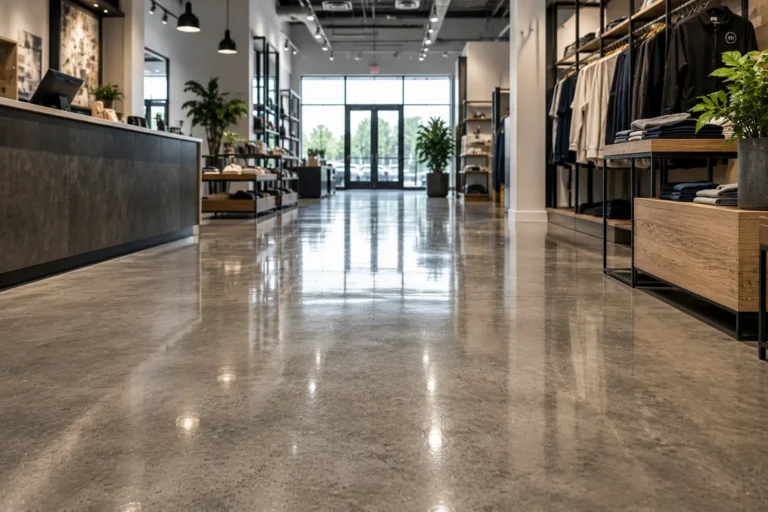
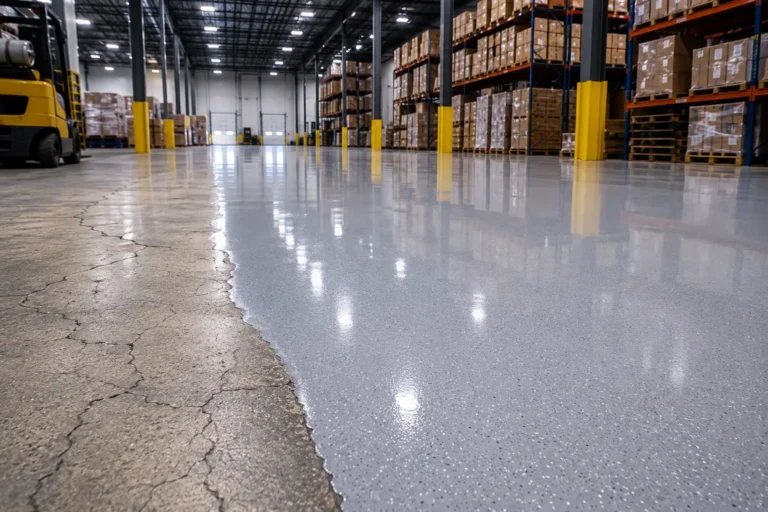
Industrial floors in warehouses, manufacturing plants, and commercial facilities experience constant pressure from foot traffic, forklifts, machinery, and heavy equipment. Without proper protection, concrete surfaces can wear down quickly, leading to dusting, stains, cracks, and costly repairs. So how to seal a concrete industrial floor?
Knowing how to seal a concrete industrial floor is essential for protecting the surface and improving long-term durability in high-traffic environments.
A properly sealed floor helps resist wear, simplifies maintenance, and improves the overall appearance and performance of the facility.
Sealing a concrete industrial floor protects it from heavy traffic, surface wear, stains, and moisture damage. Proper preparation, the right sealer, and routine maintenance are critical for long-term durability and performance.
Key Takeaways
- Concrete sealers help protect floors from wear and damage
- Surface preparation is critical before sealing
- Different sealers perform better in different environments
- Sealed concrete is easier to clean and maintain
- High-traffic facilities benefit from ongoing maintenance programs
Why Industrial Concrete Floors Need Sealing
Concrete may seem extremely durable, but unsealed concrete is porous and vulnerable to damage over time.
In high-traffic facilities, floors are exposed to:
- Heavy equipment movement
- Tire marks and abrasion
- Moisture and chemical exposure
- Dirt and debris buildup
Without protection, the surface can deteriorate faster and become more difficult to maintain.
Benefits of Sealing a Concrete Industrial Floor
Improved Durability
Sealers protect the surface from abrasion and wear caused by heavy traffic.
Reduced Dusting
Concrete dust can become a major issue in industrial environments. Sealing helps minimize surface dust.
Easier Maintenance
Sealed floors are easier to clean because dirt and spills remain on the surface instead of penetrating the concrete.
Better Appearance
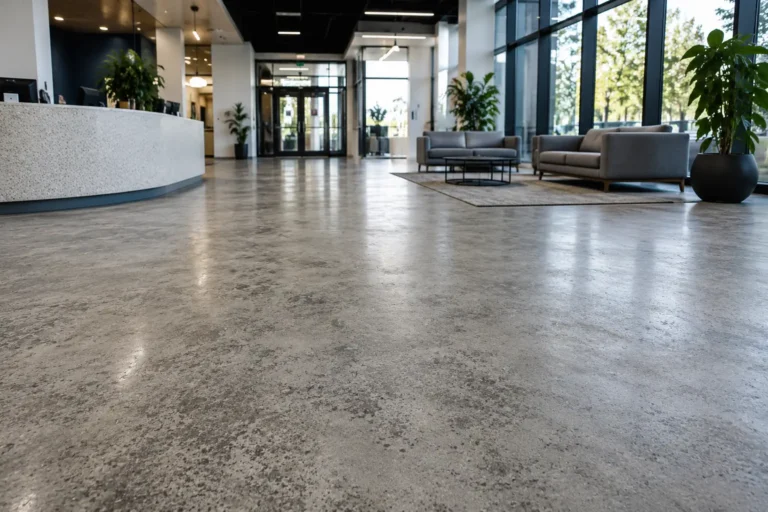
Sealing improves the overall look of the floor and helps maintain a cleaner, more professional environment.
Moisture and Stain Resistance
The right sealer helps protect against water, oil, chemicals, and staining.
Step-by-Step: How to Seal a Concrete Industrial Floor
1. Inspect the Floor
Start by evaluating the condition of the concrete.
Look for:
- Cracks or surface damage
- Existing coatings or sealers
- Oil stains or contamination
- Uneven surfaces
Repairs should be completed before sealing begins.
2. Clean and Prepare the Surface
Proper preparation is one of the most important steps.
This may include:
- Removing dirt and debris
- Degreasing contaminated areas
- Grinding the surface for better adhesion
- Repairing cracks and damaged sections
Poor preparation can lead to sealer failure.
3. Choose the Right Concrete Sealer
Different environments require different types of sealers.
Common Options
- Penetrating sealers for moisture resistance
- Acrylic sealers for appearance enhancement
- Epoxy or urethane systems for heavy-duty protection
The best option depends on traffic levels, operational needs, and facility conditions.
4. Apply the Sealer
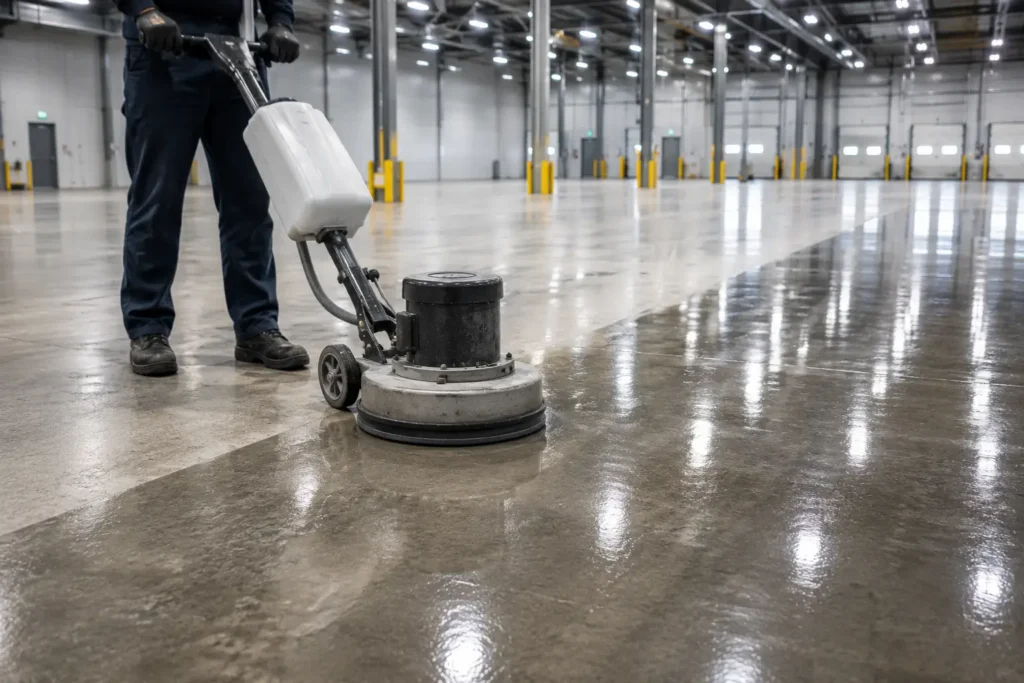
The sealer is applied evenly using professional equipment and techniques.
Important factors include:
- Proper coverage rates
- Even application
- Adequate drying and curing time
Applying too much or too little product can affect performance.
5. Allow Proper Cure Time
Before reopening the area to traffic, the floor must cure fully.
This helps:
- Improve adhesion
- Maximize durability
- Prevent premature wear
Cure time depends on the type of sealer used.
Best Sealers for High-Traffic Industrial Floors
High-traffic facilities typically require more durable systems.
Recommended for Industrial Environments
- Epoxy coatings
- Urethane systems
- High-performance penetrating sealers
These systems provide better resistance to wear, chemicals, and heavy equipment traffic.
Common Mistakes to Avoid
Skipping Surface Preparation
Poor preparation is one of the main causes of sealer failure.
Using the Wrong Sealer
Not all sealers are designed for industrial use.
Ignoring Maintenance
Even sealed floors require routine cleaning and maintenance.
Applying Sealer Over Damage
Cracks and surface issues should be repaired first.
How Maintenance Extends Sealer Performance
Sealing is not a one-time solution.
To maximize lifespan:
- Clean floors regularly
- Remove abrasive debris
- Schedule periodic inspections
- Reapply sealers when needed
Maintenance programs help preserve protection and reduce long-term costs.
When to Hire a Professional
Large industrial floors require proper equipment, preparation, and application methods.
Professional services help ensure:
- Correct sealer selection
- Proper surface preparation
- Consistent application
- Long-term durability
This is especially important for high-traffic environments where performance matters.
Conclusion
Sealing a concrete industrial floor is one of the most effective ways to improve durability and protect surfaces in high-traffic environments. Proper preparation, the right sealer, and ongoing maintenance all play an important role in long-term performance.
By investing in professional concrete floor sealing services, businesses can reduce wear, simplify maintenance, and extend the lifespan of their floors while maintaining a cleaner and more professional facility.
Frequently Asked Questions
This depends on traffic levels and the type of sealer used, but high-traffic floors may require periodic reapplication.
Some floors can, but grinding often improves adhesion and long-term performance.
Epoxy and urethane systems are commonly used for heavy-duty industrial environments.
Yes. Sealing helps reduce concrete dusting and improves cleanliness.