
Stained Concrete Floors vs Polished Concrete: Which Is Better for Commercial Facilities?
- Both stained concrete floors and polished concrete floors are durable options for commercial facilities.
- Polished concrete is typically better for high-traffic industrial spaces such as warehouses and distribution centers.
- Stained concrete floors are ideal for businesses that want decorative finishes with color and visual character.
- Maintenance, slip resistance, and operational demands should guide the final flooring choice.
- Professional commercial floor contractors can help determine the best solution based on traffic levels and facility type.
Introduction
Stained concrete floors and polished concrete are two of the most common flooring solutions used in commercial facilities. Both offer durability, low maintenance, and modern appearance, but they serve different operational needs.
For warehouses, retail spaces, schools, and industrial facilities, the choice often depends on traffic levels, aesthetic requirements, and maintenance expectations. Understanding the differences between stained concrete floors and polished concrete helps facility managers choose a flooring system that supports daily operations while maintaining a professional appearance.
What Are Stained Concrete Floors?
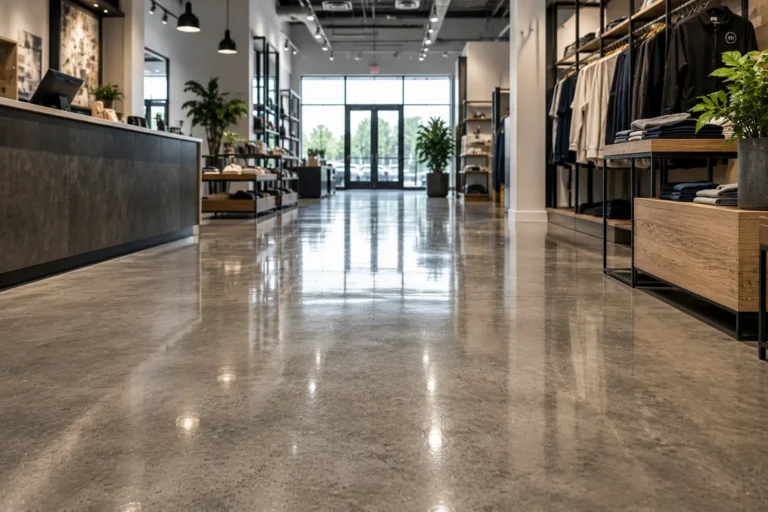
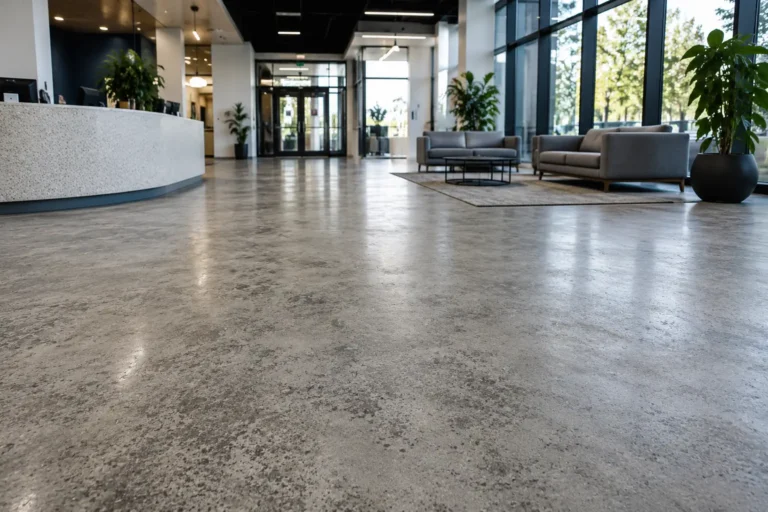
Stained concrete floors are concrete surfaces treated with chemical or water-based stains that add color and decorative patterns. The stain penetrates the concrete and reacts with minerals in the surface, creating a permanent color effect.
In commercial environments, stained concrete floors are often used in:
- Retail stores
- Restaurants and hospitality venues
- Office lobbies and showrooms
- Churches and event spaces
Unlike coatings or paint, stains do not sit on the surface. Instead, they penetrate the concrete and produce natural variations that give the floor a unique appearance.
Benefits of stained concrete floors include:
- Decorative color options and custom designs
- Improved surface durability when sealed
- Resistance to fading and peeling
- Easy cleaning and basic maintenance
However, stained concrete floors typically require a protective sealer and periodic maintenance to maintain their appearance.
What Is Polished Concrete?
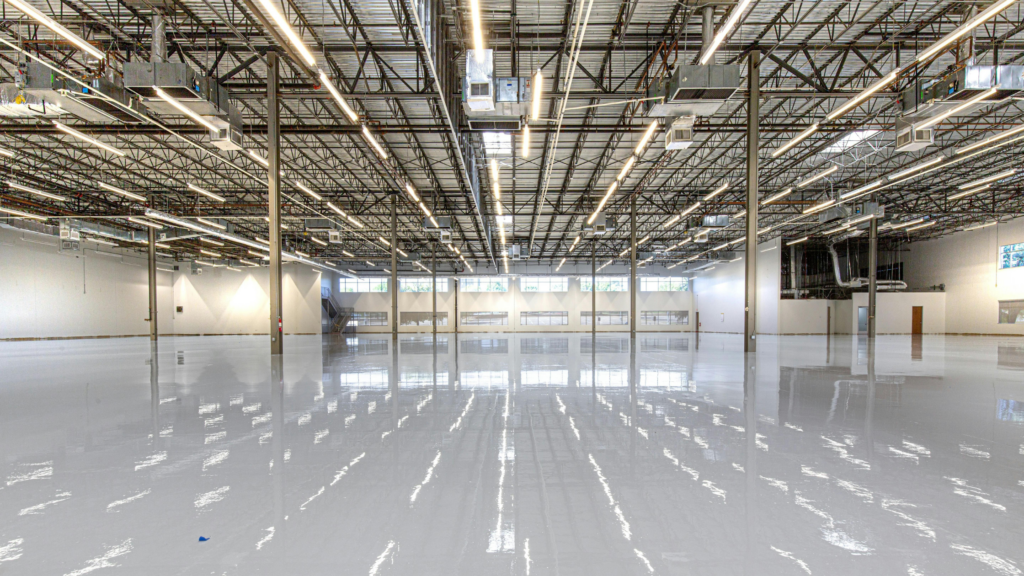
Polished concrete is a concrete floor that has been mechanically ground and polished using industrial diamond tools. The process smooths the concrete surface and increases its density, producing a reflective finish.
Polished concrete is widely used in commercial and industrial environments such as:
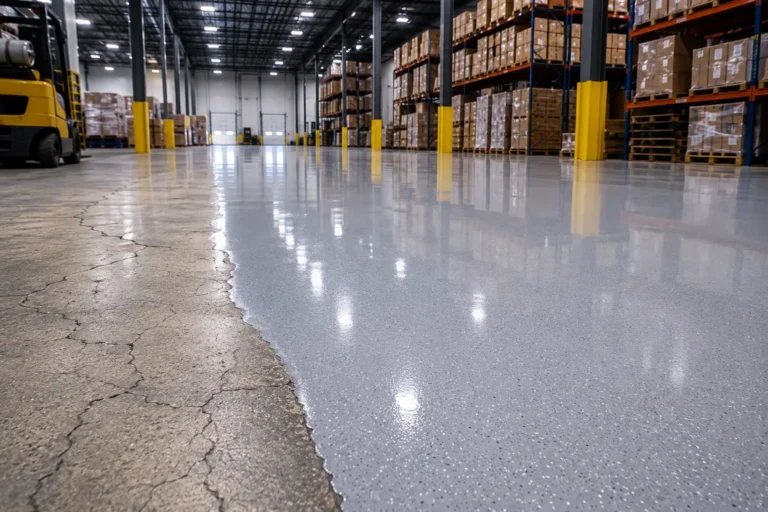
- Warehouses and distribution centers
- Manufacturing plants
- Retail stores and big-box facilities
- Schools and universities
The polishing process creates a hardened surface that resists dusting, staining, and wear.
Common advantages of polished concrete include:
- Extremely high durability
- Low long-term maintenance requirements
- Improved light reflectivity in facilities
- Resistance to heavy equipment and traffic
Because polished concrete strengthens the existing slab, it is often the preferred solution for large industrial spaces that experience constant forklift or machinery use.
How Do Stained Concrete Floors and Polished Concrete Compare?
The biggest difference between stained concrete and polished concrete is their purpose. Stained concrete focuses more on aesthetics, while polished concrete focuses on durability and performance.
| Feature | Stained Concrete Floors | Polished Concrete |
|---|---|---|
| Primary Purpose | Decorative appearance | Industrial durability |
| Maintenance | Periodic resealing required | Minimal maintenance |
| Traffic Resistance | Moderate to high | Very high |
| Visual Style | Colorful and decorative | Smooth and reflective |
| Best For | Retail, restaurants, offices | Warehouses, factories, schools |
Both flooring types can be installed on existing concrete slabs, which makes them practical solutions for commercial renovations.
Which Flooring Option Is Better for Commercial Facilities?
The better option depends on how the facility operates.
1. Choose stained concrete floors when visual appeal is important
Businesses that want visually distinctive floors often choose stained concrete.
Examples include:
- Restaurants and cafés
- Retail stores and boutiques
- Event venues
- Corporate offices
The ability to customize colors and patterns helps businesses align the floor design with branding or interior aesthetics.
2. Choose polished concrete for high-traffic industrial environments
Polished concrete is the better choice when durability and longevity are the top priorities.
Typical applications include:
- Warehouses and distribution centers
- Manufacturing facilities
- Logistics hubs
- Educational campuses
The hardened surface handles forklifts, pallet jacks, and heavy equipment without the same maintenance requirements as decorative flooring systems.
What Are the Long-Term Maintenance Requirements?
Maintenance is a major factor when choosing between stained concrete floors and polished concrete.
Stained concrete maintenance often includes:
- Routine cleaning and dust removal
- Reapplication of sealers every few years
- Occasional touch-ups in high-traffic zones
Polished concrete maintenance typically includes:
- Daily dust mopping
- Periodic floor scrubbing
- Occasional burnishing to restore shine
Because polished concrete does not rely on coatings or sealers, it usually requires fewer long-term maintenance procedures.
The U.S. General Services Administration notes that polished concrete can reduce long-term maintenance costs in commercial buildings because it eliminates waxes and coatings.
What Are the Best Industries for Each Flooring Type?
Some industries consistently benefit more from one flooring system over the other.
Best industries for stained concrete floors:
- Retail stores
- Restaurants and hospitality
- Churches and event venues
- Office buildings
Best industries for polished concrete:
- Warehouses
- Industrial manufacturing
- Schools and universities
- Large retail chains
Facility managers should also consider factors such as safety requirements, slip resistance, and operational downtime when selecting a flooring system.
Conclusion
Both stained concrete floors and polished concrete provide strong, long-lasting flooring solutions for commercial facilities. The right choice depends on how the space is used.
Stained concrete floors offer visual appeal and decorative flexibility, making them a popular option for retail spaces, restaurants, and office environments. Polished concrete, on the other hand, provides unmatched durability for warehouses, industrial facilities, and high-traffic commercial spaces.
For facility managers and property owners, working with experienced commercial floor contractors helps ensure the flooring system matches operational demands and maintenance expectations.
If your business is considering a concrete flooring upgrade, our team provides nationwide services including concrete polishing, grinding, and restoration for commercial facilities.
Frequently Asked Questions
Yes. Stained concrete floors are durable when sealed properly, but they typically perform best in moderate-traffic commercial environments such as retail or offices.
Yes. Polished concrete generally offers higher durability because the polishing process hardens the concrete surface and increases density.
Stained concrete floors can become slippery if sealed improperly. Anti-slip additives can be added to sealers to improve traction.
When maintained correctly, stained concrete floors can last decades. However, periodic resealing is required to protect the surface.
Polished concrete is often cost-effective for large facilities because it uses the existing concrete slab and requires minimal long-term maintenance.
Yes. In some cases, stained concrete floors can be re-ground and polished if the slab condition allows it.
Polished concrete is usually the best option for warehouses because it handles heavy equipment and continuous traffic.