

Commercial floor cleaning in Fort Worth usually means one of three jobs: protecting concrete in warehouse and plant space, resetting finishes in schools and public buildings, or keeping retail, medical and office floors presentable. Match the method to the floor, then book it for a quiet window. Send your floor types, square footage, photos and working hours, and we will propose a night or weekend schedule.
TCS Floors serves Fort Worth facilities as part of its nationwide coverage, with 33+ years in commercial floor care. One note on the data below. Business counts are for the whole Dallas-Fort Worth metro area, while school and hospital counts are for Tarrant County.
The buildings and floors behind Fort Worth’s workday
Start with the size of the market. The Dallas-Fort Worth metro area has 21,680 retail establishments and 18,161 food and lodging establishments. Those are the stores, restaurants and hotels where an entrance floor is part of the first impression.
Health care is larger still, with 23,741 health care establishments in the Dallas-Fort Worth metro area. In Tarrant County alone there are 30 Medicare-registered hospitals. Medical floors need steady routines more than occasional rescue work.
Schools are the other big block of floors. Tarrant County has 597 operating public schools, which means a very large amount of corridor, cafeteria and gym flooring. School work follows the calendar, with deep projects in summer and holiday breaks.
Warehouses and concrete floors in the Dallas-Fort Worth area
Logistics is where this metro stands out. The Dallas-Fort Worth metro area has 703 warehousing and storage establishments. Their floors take forklift wheels, pallet jacks, dust and the occasional spill every day.
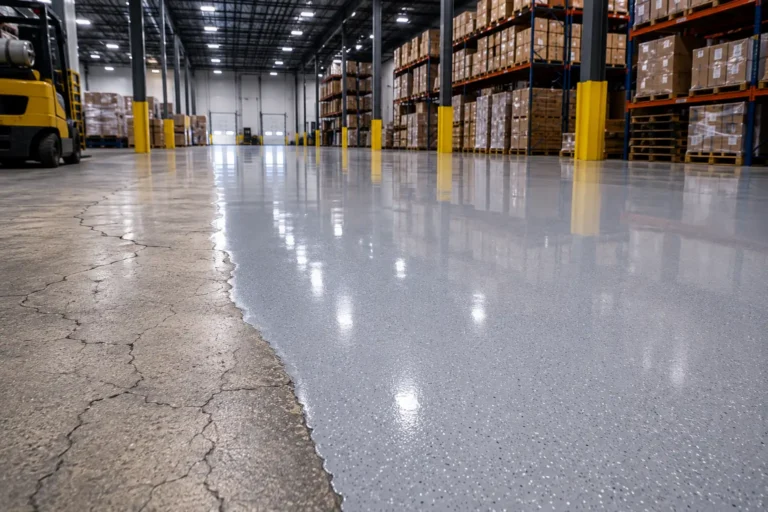
Concrete floors in these buildings need a plan, not a one-time scrub. A sealed or polished slab is easier to sweep and resists dust. Read about commercial concrete polishing if you want a surface that holds up to wheel traffic.
Texas heat and dry spells put fine dust in the air, and open dock doors let it settle on the floor. A raw slab that sheds dust is a good candidate for sealing or polishing. Ask the contractor to check the slab for cracks, joints and old coatings before choosing a method.
What “commercial work floor cleaning” actually covers
People search for this phrase when they mean the floors where work gets done. That includes production floors, back rooms, kitchens, shop floors and service bays, not only lobbies. These areas need strong scrubbing more than a high shine.
Our commercial floor cleaning services cover both ends. Use the list below to match the service to the floor.
- Concrete scrubbing: removes oil, tire marks and ground-in soil from work areas.
- Sealing: closes the pores of raw concrete so dust and stains do not sink in.
- Scrub and recoat: renews the finish on resilient floors in schools, stores and offices.
- Strip and wax: a full reset when the finish has failed. See commercial VCT strip and wax.
- Burnishing: brings back gloss between recoats in busy halls.
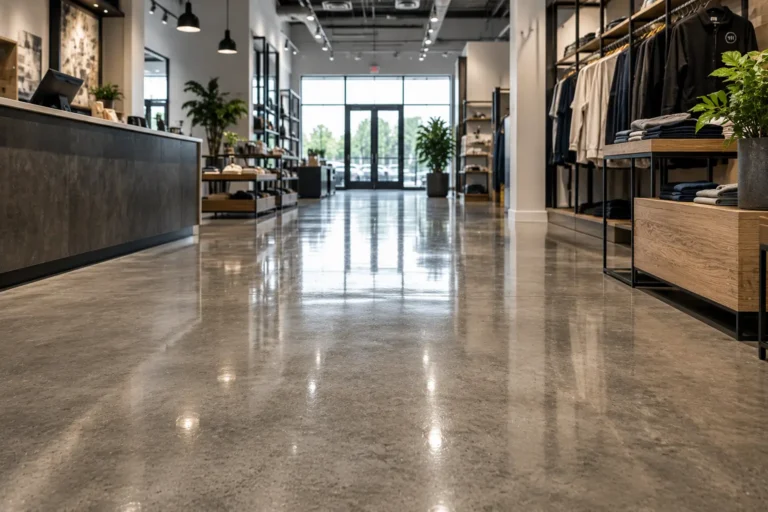
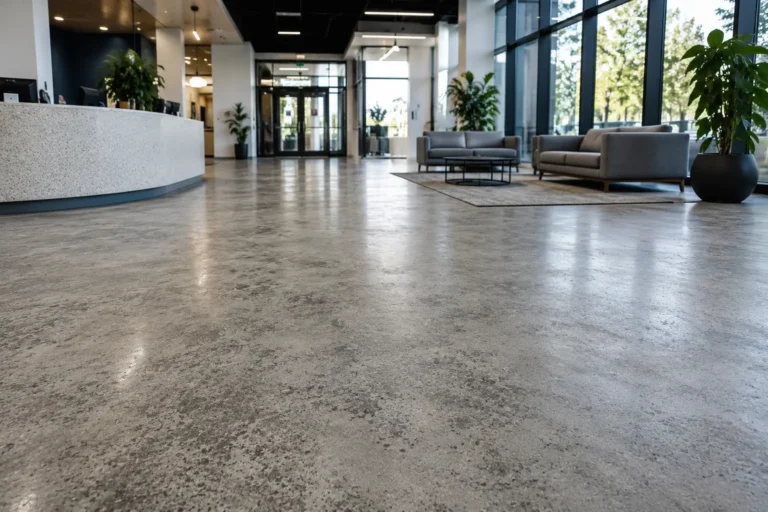
- Polishing: for concrete and stone where you want a durable, easy-care surface.
Schools, clinics and stores in Tarrant County
Resilient floors in schools and stores live or die by their finish. A sound finish traps soil on its surface, where a scrub can lift it. A worn finish lets soil into the tile, and then only a strip and recoat will bring the floor back.
Walk your busiest corridor in daylight and look along the floor at a low angle. Dull lanes, black scuffs and edges that stay dirty after cleaning point to a finish that is ready for work. Take photos of those areas for the quote.
Hospitals and clinics add a second need. Treat corridors, waiting rooms and back rooms as separate zones, with their own routine and their own quiet window. Ask the contractor how work will be sequenced so patients and staff always have a clean, dry path.
The cost of waiting is real in each of these settings. A finish that fails before its recoat takes more work to restore, and a slab left untreated keeps shedding dust into the building.
How to choose a commercial floor contractor in Fort Worth
Do not pick on a list. Pick on answers you can check. Ask for these items in writing.
- A scope that separates work floors from public floors and names the process for each.
- A commercial-only focus, so the crew understands operating buildings.
- Night and weekend scheduling that keeps your dock, line or school running.
- A customized maintenance program for the time between major services.
- Reach across the metro and beyond. Our commercial floor care in Dallas page covers the other half of the metro, and our commercial floor cleaning across Texas page covers the state.
- A photo review or site walk before a final price.
If a quote does not mention floor type, access or working hours, ask why. It usually means the contractor has not looked at the job.
Scheduling around dock hours, shifts and school calendars
Each building type has its own quiet window. Warehouses often run in shifts, so cleaning moves to the gap between them or to a weekend.
Retail and medical sites clear overnight. Schools open up in summer.
Work in zones and mark each one clearly. Keep forklift lanes, entrances and exits usable as long as you can. Tell the contractor about shipments, inspections and events so the plan does not collide with them.
Plan for weather as well. Heavy rain and wind carry grit and moisture through entrances, and summer heat can change how quickly a coating sets. Share your entrance layout and any matting you use so the schedule can allow for both.
Planning the work in your building
For a quote, send floor types, square footage, photos of each area and your working hours. Add the areas that must stay in service and any that can close completely. A short note on current problems, such as dust, oil or a peeling finish, helps scope the job.
TCS Floors schedules nights and weekends and builds customized maintenance programs around your traffic. We work on commercial buildings only and across the country.
Keep a short log of each visit with the date, the area, the method used and a photo. Over a few months it shows which zones wear fastest, which helps you set the routine and decide when a major service is due.
Where these numbers come from
Business counts for the Dallas-Fort Worth metro area are from the U.S. Census Bureau, County Business Patterns 2023.
School counts for Tarrant County are from the National Center for Education Statistics, Common Core of Data 2023, via the Urban Institute Education Data Portal. Hospital counts for Tarrant County are from the Centers for Medicare & Medicaid Services, Hospital General Information, updated July 22, 2026.
Frequently asked questions
What is commercial work floor cleaning?
It is floor cleaning for the areas where a business does its work, such as production floors, warehouses, kitchens, shops and service areas. It focuses on removing oil and soil and protecting the surface.
How do I get commercial floor cleaning scheduled in Fort Worth?
Send your floor types, square footage, photos and working hours. Say which areas must stay in service. TCS Floors then proposes a night or weekend schedule.
How do I choose a commercial floor cleaning company in Fort Worth?
Ask for a written scope by floor type, an after-hours plan, a maintenance program and a photo review or site walk. Compare those answers.
Should I seal or polish a warehouse concrete floor?
Both reduce dust and make the floor easier to clean. Sealing protects a raw slab, and polishing gives a harder, smoother surface. A site check of the slab decides which one fits.
Are the numbers in this guide for Fort Worth only?
No. Business counts are for the Dallas-Fort Worth metro area. School and hospital counts are for Tarrant County.