
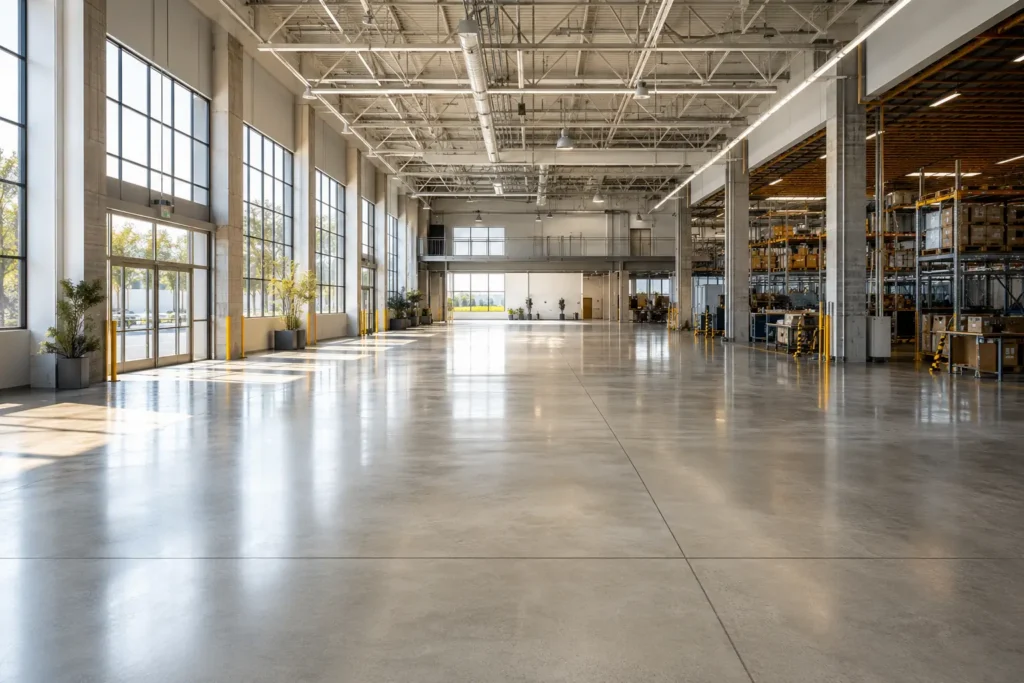
San Francisco facilities need commercial floor care that works inside tight, occupied buildings: polished concrete and finished floors in offices, durable surfaces in clinics and restaurants, and a schedule that respects shared access. Office floor polishing is a good place to start, since lobbies and open floors set the first impression.
TCS Floors serves San Francisco facilities as part of its nationwide coverage, with night and weekend scheduling. Here is how to plan the work.
The buildings and floors in San Francisco
The federal counts describe a dense, service-heavy market. The San Francisco Bay Area metro area has 16,920 health care establishments, 13,736 food and lodging establishments and 12,038 retail establishments. Warehousing is far smaller, at 214 warehousing and storage establishments in the metro area.
Inside the city itself, San Francisco County has 132 operating public schools and 13 Medicare-registered hospitals. Together these numbers point to a market of many small and mid-size interiors, not a few large footprints.
Offices and lobbies
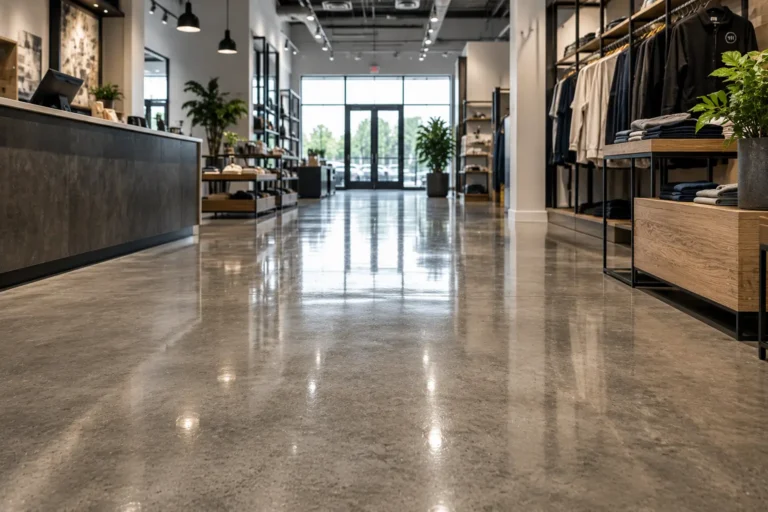
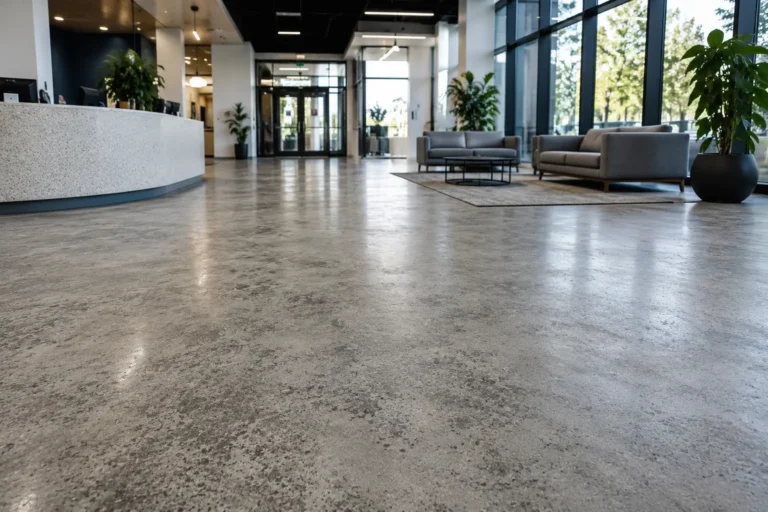
Office floors are the ones people ask about most when they search for polishing here. Polished concrete, stone, terrazzo and finished tile all show up in lobbies and open floors. They need a clean surface that reflects light evenly.
Office floor polishing means working in sections after hours, with clear instructions for the building’s management on access and elevators. Plan it as a recurring task, not a one-off project.
Between polishing visits, day-to-day care matters. A clean, dry, dust-free surface keeps the sheen, while grit left on the floor slowly dulls it. Ask your daily cleaners to use the method your floor contractor recommends.
Health care
Health care is the largest of the counted groups, with 16,920 establishments in the metro area. Many sit in multi-tenant buildings where floors are shared with the landlord. Agree early who is responsible for the corridor and the suite floor.
The 13 hospitals in San Francisco County need their own phased plans, since wings and corridors cannot all close at once.
For clinics and offices in shared buildings, a short, quiet visit after the last appointment works better than a long daytime one. Keep the equipment list short and the plan simple.
Restaurants, hotels and retail
With 13,736 food and lodging establishments and 12,038 retail establishments in the metro area, small footprints matter more than big ones. A cafe floor, a boutique and a hotel corridor each need a short, well-timed visit.
Cool, damp air and fog-laden mornings can keep moisture on entrance floors. That is another reason to treat the door zone first.
Schools and warehouses
San Francisco County has 132 operating public schools. Hallways and classrooms follow the school calendar, so the best windows are breaks and weekends. VCT strip and wax belongs on that calendar.
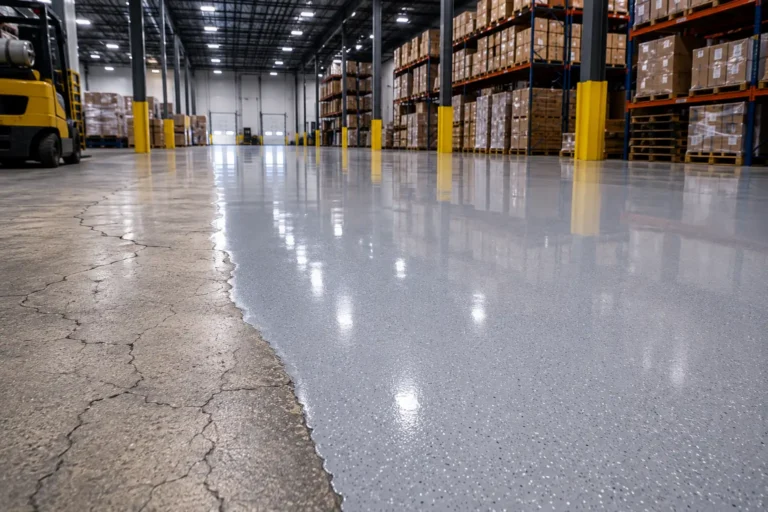
The 214 warehousing and storage establishments in the metro area rely on concrete. Scrubbing and sealing keep those floors clean and workable.
Floor services for San Francisco buildings
Choose by floor type and condition. Our commercial floor cleaning services page lists the full range.
- Polishing. Brings concrete and similar hard floors to an even, reflective surface. See commercial concrete polishing.
- Burnishing. Keeps finished floors glossy between bigger jobs.
- Scrub and recoat. Refreshes tired finish in corridors, kitchens and stores.
- VCT strip and wax. Resets old resilient floors. See commercial VCT strip and wax.
- Concrete scrubbing and sealing. Cleans and protects utility and warehouse slabs.
The same approach applies across the state. For work in other California cities, see commercial floor cleaning across California.
Choosing between polishing and a coated finish
Polishing changes the concrete itself, so it lasts through foot traffic, rolling loads and repeat cleaning. A coated finish sits on top and needs recoating on a schedule. If the floor will stay as it is for years, polishing is usually the better fit.
If a tenant may change the use of the space, a coated finish is easier to adjust. Ask the contractor to explain the trade in plain words.
Many San Francisco buildings are older, with floors that were patched or recoated over the years. Expect the contractor to ask about that history. Photos of seams, patches and stains help them choose the right first step.
How to choose a commercial floor contractor in San Francisco
A building with shared elevators, loading access and several tenants needs a contractor who plans before arriving. Judge candidates by these checks.
- Written scope by floor type and area, with a stated order of work.
- A plan for access: elevators, loading areas, and where equipment is kept between visits.
- A test section on your floor before the full area is done.
- Night and weekend availability that matches your building rules.
- A clear plan for upkeep after the first job.
Ask whether the contractor works only on commercial buildings. A commercial-only provider is used to access rules, set hours and shared floors.
Scheduling around operations in San Francisco
In dense buildings, the schedule often depends on others: building management, neighboring tenants and loading dock times. Settle those first, then the cleaning window.
TCS Floors offers night and weekend scheduling. Offices and clinics fit evenings and weekends.
Restaurants and shops fit overnight windows. Hotels need zone-by-zone work that keeps a path open for guests.
Where a floor serves more than one tenant, give every tenant the date and the closed areas in writing. A short notice a few days ahead avoids the surprise of a closed corridor.
Getting access right
Many jobs here are won or lost at the loading door. Ask the building manager for the rules before the quote: where equipment can enter, which elevator it may use and when that elevator is free.
Share those rules with the contractor in writing. A plan that fits your access rules on paper is far more likely to fit them on the night.
Planning the work in your building
Send the square footage, photos of each floor, the floor types, and the hours the space is available. Add access notes, such as freight elevator rules, if you have them.
After the first job, ask for a customized maintenance program so each area gets the right routine. TCS Floors is commercial only, works nationwide and has 33+ years of experience. See how it runs by state.
Sources for the figures in this guide
Establishment counts come from the U.S. Census Bureau, County Business Patterns 2023 (metro area counts).
School counts come from the National Center for Education Statistics, Common Core of Data 2023, via the Urban Institute Education Data Portal. Hospital counts come from the Centers for Medicare & Medicaid Services, Hospital General Information, dataset updated July 22, 2026.
Frequently asked questions
What is office floor polishing?
It is a process that grinds and refines concrete or similar hard floors to an even, reflective surface. It suits lobbies and open office floors and is usually done after hours.
Is polishing or a coated finish better for an office floor?
Polishing lasts longer on concrete that will stay as it is. A coated finish is easier to change but needs recoating on a schedule.
Can commercial floor work in San Francisco happen after hours?
Yes. TCS Floors schedules night and weekend work, which suits offices, clinics and retail.
How do I choose a commercial floor contractor in San Francisco?
Ask for a written scope, an access plan, a test section and a plan for upkeep. Confirm the contractor works on commercial buildings only.
What should I send for a quote?
Send the square footage, photos, floor types, working hours and any access rules such as elevator limits.