
Washington, D.C. facilities need commercial floor care that works around occupied buildings. Offices, clinics, hotels, stores and schools cannot close a corridor for long, so most work runs at night and on weekends, one section at a time. To get it scheduled, send your floor types, square footage, photos and working hours, and agree on a night or weekend plan.
TCS Floors serves Washington facilities as part of its nationwide coverage, with 33+ years in commercial floor care. This guide covers the buildings in the metro area, the floor services they need, how to choose a contractor and how to plan the work.
The buildings and floors in Washington, D.C.
Federal data shows how mixed the building stock is. The Washington metro area has 15,148 retail establishments and 14,138 food and lodging establishments. Each one has an entrance floor, a customer floor and a back-of-house floor, and each wears differently.
Health care is the largest group in the same count, with 19,078 health care establishments in the Washington metro area. Those floors are cleaned on a routine and recoated before they look worn, not after. In the District itself there are 10 Medicare-registered hospitals, where corridors, patient areas and service areas each run on their own schedule.
Schools add another set of floors. The District has 242 operating public schools, and their hallways, gyms and cafeterias take traffic all year. Summer break and holidays are your windows for deep work.
Warehousing is a much smaller group, with 149 warehousing and storage establishments in the Washington metro area. Concrete work here often means loading docks, back-of-house rooms and service areas inside other buildings. Many of these sites are tight, so access and noise matter as much as the method.
Which floor services Washington facilities need
Match the service to the floor and to how it is used. Our commercial floor cleaning services cover the full range, and the common ones in this market are below.
- Scrub and recoat: the routine reset for resilient floors in lobbies, retail aisles and corridors. It restores the finish without stripping it.
- Strip and wax: a full reset for commercial VCT strip and wax when the finish is built up, yellowed or damaged.
- Burnishing: a regular pass that brings back gloss between recoats in busy halls.
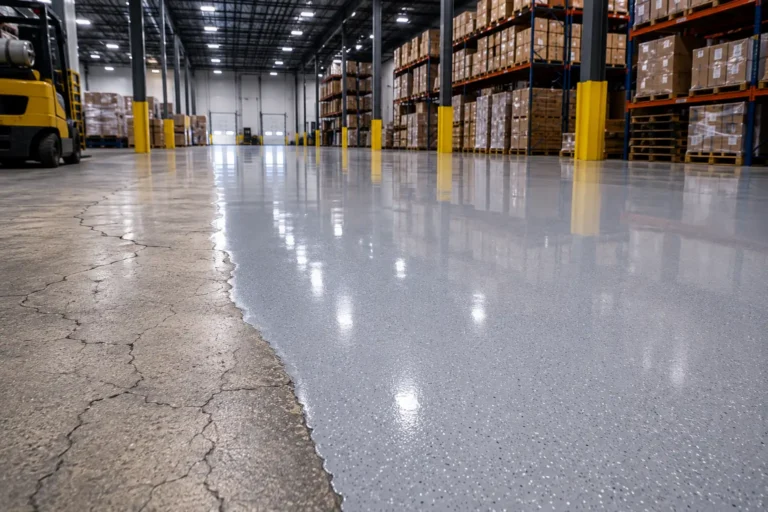
- Concrete scrubbing and sealing: for loading areas, garage levels and service rooms that collect oil, grit and dust.
- Polishing: for concrete, and for stone and terrazzo in older lobbies and corridors.
Winter slush and salt come in through entrances and dull a finish quickly. Humid summers show up as tracked grime and a flat look in traffic lanes. Plan extra entrance care for both.
Commercial floor polishing in Washington
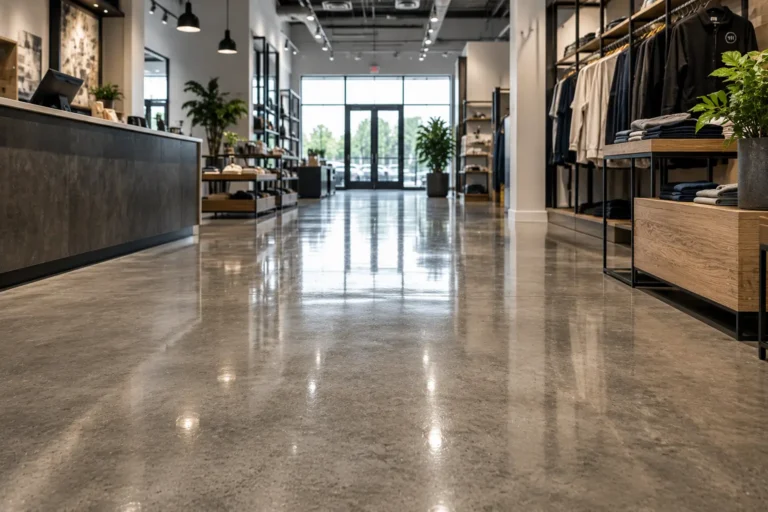
Polished floors look best when the process matches the material. Concrete, terrazzo and natural stone each need their own steps, so ask for a floor assessment before work starts. Photos of the floor and a note on its age help.
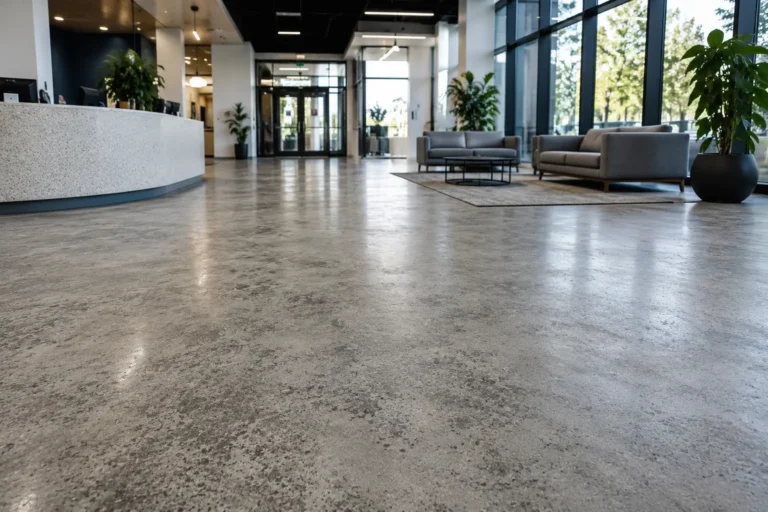
For concrete, read about commercial concrete polishing before you decide between polishing and a sealed finish. Polishing suits floors in good structural shape. A damaged or heavily stained slab may need repair or a different finish first.
Do not polish to hide a problem. If a floor is cracked, uneven or contaminated, fix that first, or the shine will fail where the damage is.
Health care, lodging and retail floors
Each of the big groups in the federal counts asks something different of a floor. Think about who walks on it, what is spilled on it and how fast it must be back in use.
- Health care: corridors and waiting rooms need a clean, even finish and a routine that does not interrupt patient flow. Service areas and kitchens need heavier scrubbing. Plan each zone on its own.
- Food and lodging: kitchens, dining rooms, lobbies and guest corridors all differ. Grease in the back and foot traffic in front are the two big drivers.
- Retail: the sales floor is part of your brand. Scuffs and dull lanes in front of the register and the entrance cost you more than the same marks in a stockroom.
Put the highest-visibility floors on the tightest routine. A short maintenance visit in a lobby is easier on your budget and your calendar than a full reset after the finish fails.
How to choose a commercial floor contractor in Washington
Skip the ranking lists and ask for things you can check. A good contractor will answer each point below in writing.
- Commercial focus: the firm should work on commercial buildings only, not homes.
- Scope by floor type: the quote should name each floor type and the service for it.
- Night and weekend scheduling: ask who will be on site after hours and how they will keep your public areas open.
- A maintenance program: one-time work fades. Ask for a customized plan with a set routine between visits.
- Coverage: if you manage sites in the District, Maryland and Virginia, one contractor with nationwide reach keeps standards the same. See our pages on commercial floor care in Baltimore and commercial floor care by state.
- Site walk and photos: a firm that asks to see the floor first is pricing the real job.
Scheduling around operations
Occupied buildings are the rule here. Offices clear in the evening, hotels run all night and clinics keep corridors open, so the work moves in sections with clear signage and one open path.
Put the loudest and wettest work in the quietest window. Do strip and wax and deep scrubs on weekends, and keep burnishing and light maintenance for weeknights. For schools, book the big jobs for summer break and holidays well ahead.
Planning the work in your building
For a quote, send the floor types, the square footage, photos of each area and your working hours. Add any areas that must stay open and any that can close completely. That is enough to scope the job and propose a schedule.
TCS Floors builds customized maintenance programs, so you get a routine that fits your traffic, not a one-time clean that fades. We schedule nights and weekends. We work on commercial buildings only and across the country.
If your Washington portfolio includes several tenants or floors, set one standard for the finish and the routine, and write it into the plan. A shared standard keeps lobbies, corridors and back rooms looking like one building, and it makes the next quote easier to compare.
Where the numbers come from
Establishment counts for the Washington metro area come from the U.S. Census Bureau, County Business Patterns 2023.
School counts come from the National Center for Education Statistics, Common Core of Data 2023, through the Urban Institute Education Data Portal. Hospital counts come from the Centers for Medicare & Medicaid Services, Hospital General Information, updated July 22, 2026.
Frequently asked questions
How do I get commercial floor cleaning scheduled in Washington, DC?
Send your floor types, square footage, photos and working hours. Say which areas must stay open. TCS Floors then proposes a night or weekend plan that fits your building.
What does commercial floor polishing involve in Washington?
It depends on the material. Concrete, terrazzo and stone each need their own process, so the floor is assessed first. Damaged or stained floors may need repair before polishing.
How do I choose a commercial floor cleaning company for concrete floors?
Ask for a written scope for your slab, a site walk or photo review, a plan for after-hours work and a maintenance routine for between visits. Choose on those answers, not on a ranking.
Can terrazzo floors in older buildings be polished?
Often yes, if the surface is sound. A contractor should check the floor first and match the steps to its condition.
Do you work at night and on weekends?
Yes. TCS Floors schedules nights and weekends so offices, clinics, hotels and stores stay open during the day.