

Commercial floor cleaning in Las Vegas comes down to three jobs: getting fine desert dust off the floor before it scratches the finish, matching the service to each floor type, and doing the work while the building is quiet. TCS Floors serves Las Vegas facilities as part of its nationwide coverage, with night and weekend scheduling.
This guide shows what the local mix of buildings means for your floors, how to judge a contractor, and what to send for a quote.
The buildings and floors in Las Vegas
Federal business counts show a metro area built around people moving through buildings. There are 6,500 retail establishments in the Las Vegas metro area and 5,780 food and lodging establishments. Add 7,065 health care establishments in the Las Vegas metro area, and you have three groups that each run long hours.
Each group asks something different of the floor. Here is how it breaks down.
Health care floors
Health care is the largest of the three groups, and 26 Medicare-registered hospitals in Clark County sit on top of the clinics and offices. These floors are mostly sheet vinyl, VCT and sealed concrete. They need a finish that cleans easily and keeps its look under carts and foot traffic.
Many areas cannot close. Plan work in sections so a corridor or wing is always open.
Retail floors
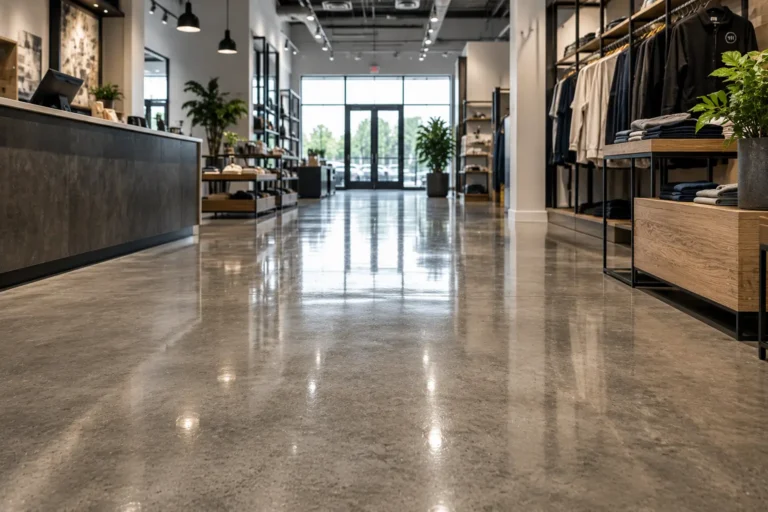
With 6,500 retail establishments in the Las Vegas metro area, store floors are a daily competition for attention. Customers read the floor before they read the shelf. Dull, scuffed tile or concrete makes the whole store look tired.
Dust blows in every time the door opens, and shoes grind it into the surface. Regular burnishing and scheduled scrub and recoat work keep the shine from fading between big projects.
Food and lodging floors
The 5,780 food and lodging establishments in the Las Vegas metro area include kitchens, dining rooms, lobbies and back corridors. Kitchen floors fight grease. Lobby floors fight foot traffic and the need to look finished at every hour.
Lodging never really shuts down, so work moves floor by floor and zone by zone. A good plan keeps a guest route clean and open the whole time.
Schools and warehouses
Clark County has 449 operating public schools. Hallways and classrooms are often VCT, which needs a strip and wax cycle when the finish wears through. School breaks and weekends are the natural window for that work.
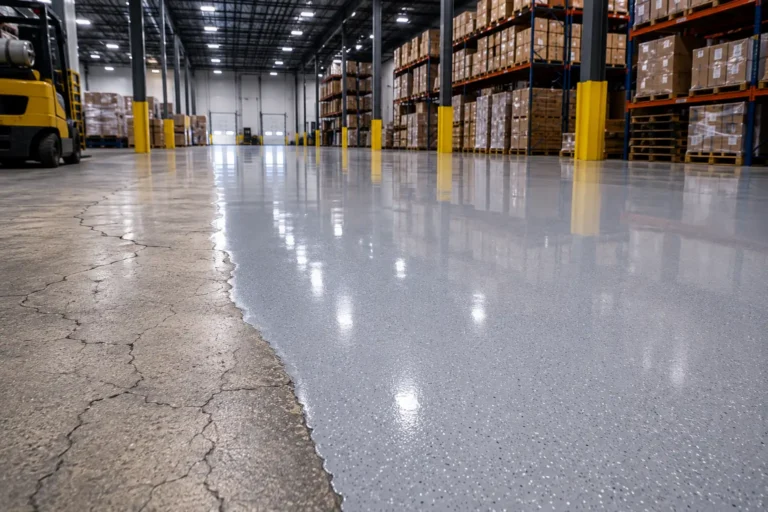
The metro area also has 159 warehousing and storage establishments. Their floors are mostly concrete, and in a dry, dusty climate that surface sheds fine powder. Concrete scrubbing and sealing keep that dust under control and make the floor easier to clean.
Which floor services Las Vegas facilities need
Desert dust is the common thread. It is fine, it is everywhere, and it acts like sandpaper under shoes and wheels. A cleaning program that skips the dust shortens the life of the finish.
- Scrub and recoat. Removes ground-in soil and puts a fresh protective layer on tile, VCT or sealed floors without a full strip.
- Burnishing. Brings back gloss on finished floors in lobbies, stores and corridors.
- VCT strip and wax. The reset when the finish is worn through. See our page on commercial VCT strip and wax.
- Concrete scrubbing and sealing. Cleans warehouse, back-of-house and utility floors and closes the surface against dust.
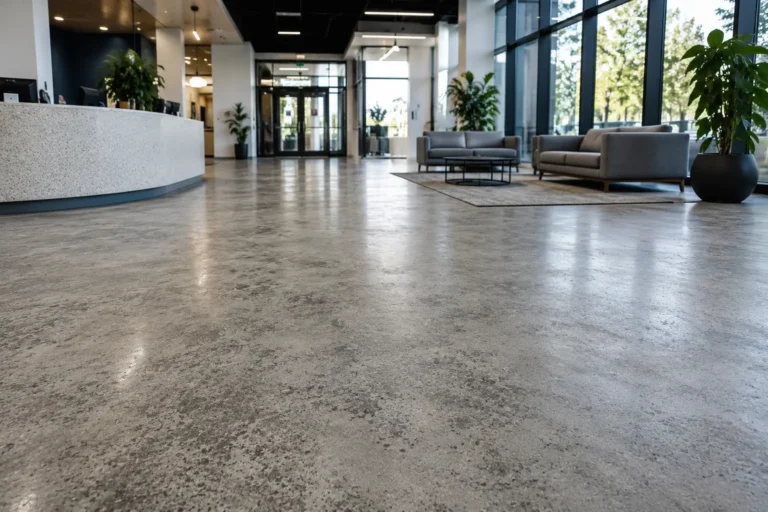
- Polishing. Turns bare concrete into a dense, easy-to-clean surface. See commercial concrete polishing.
Most buildings use more than one of these. A hotel might burnish its lobby, scrub and recoat its corridors and seal its back-of-house concrete. A clinic might recoat its public areas and keep its sealed treatment-room floors on a lighter routine.
Start with the floor that people see first, then work back toward the areas they do not. That order protects your first impression and spreads the work over your budget cycle.
The full range of cleaning work is on our commercial floor cleaning services page.
How to choose a commercial floor contractor in Las Vegas
Ignore “best” claims and check things you can verify. Ask for these five items before you sign.
- A written scope for each floor type and area, not one price for “the building”.
- A plan that names the hours of work, and who you call if the schedule slips.
- A test area on a floor like yours, so you see the result before the full job.
- A plan for the days after the job, because a floor that is cleaned once and then ignored goes back to where it started.
- A clear answer on whether the contractor works only on commercial buildings.
Contractors who answer in general terms usually have not looked at your floors. Ask for photos to be reviewed before a quote, and be wary of a number given without them.
It also helps to ask what the contractor would not do on your floor. A straight answer about limits, such as a floor that needs sealing before it can be polished, shows that someone looked at the surface.
Scheduling around operations
Las Vegas buildings keep unusual hours. Lodging, health care and many retail sites are open when other cities have gone home. The right window is often overnight or on a weekend.
TCS Floors schedules night and weekend work so the floor is ready when your people and customers return. For buildings that never close, work is split into zones with a route kept open. Tell us which areas can close and for how long, and the schedule follows from that.
Weekends help schools and offices most, since the building is empty and no one has to walk around equipment. Nights help retail and lodging most, since the doors can stay open to the public by day. Pick the window by who you need to keep out of the work area, not by habit.
Planning the work in your building
To get a quote, send the square footage, photos of the floors, the floor type if you know it, and the hours the space is available. Photos of the worst areas help most. With those, a scope and schedule come together quickly.
After the first job, ask for a customized maintenance program. It sets how often each area needs scrubbing, burnishing or recoating, so the work stays routine and the big resets stay rare.
TCS Floors is commercial only, works nationwide and has 33+ years of experience. See how coverage runs by state.
Where the numbers come from
Business counts come from the U.S. Census Bureau, County Business Patterns 2023 (metro area counts).
School counts come from the National Center for Education Statistics, Common Core of Data 2023, via the Urban Institute Education Data Portal. Hospital counts come from the Centers for Medicare & Medicaid Services, Hospital General Information, dataset updated July 22, 2026.
Frequently asked questions
What does commercial floor cleaning in Las Vegas include?
It covers scrub and recoat, burnishing, VCT strip and wax, concrete scrubbing and sealing, and polishing. The mix depends on your floor type and how much traffic and dust the space sees.
How do I choose a commercial floor care service in Las Vegas?
Ask for a written scope per floor type, a named schedule, a test area on a floor like yours and a plan for upkeep after the job. Check that the contractor works on commercial buildings only. Answers in general terms are a warning sign.
Can floor work in Las Vegas be done at night or on weekends?
Yes. TCS Floors schedules night and weekend work, which suits lodging, health care and retail sites that cannot close during the day.
What are industrial floor scrubbers used for in a commercial building?
They clean large hard floors faster and more evenly than hand mopping, which matters on concrete, tile and sealed floors in warehouses and back-of-house areas. Machine scrubbing is part of scrub and recoat and concrete scrubbing work.
What is the difference between commercial floor care and commercial floor cleaning?
Cleaning removes soil. Floor care adds the finish work around it, such as recoating, burnishing, sealing and polishing, so the floor holds up between cleanings.
What should I send for a quote?
Send the square footage, photos, floor type, and the hours the space is open to work. A customized maintenance program can follow once the first job is done.