
Hospital Floor Cleaning for Hospitals, Clinics and Medical Offices
Hospital floor cleaning works when each zone gets its own method, its own schedule and a clear owner. A lobby, a patient ward, an exam room and a loading corridor wear differently and need different care.
This guide covers hospitals, clinics and medical offices. It explains how to set up the work, what to ask a floor care contractor and when daily cleaning is no longer enough.
Hospital floor cleaning starts with a zone plan
Do not treat the building as one floor. Walk it and mark each area by traffic, floor type and who uses it. Public corridors, patient rooms, procedure areas, kitchens and service routes all sit in different categories.
That map drives everything else: the method, the frequency, the working hours and the budget. A program that skips this step ends up over-cleaning quiet rooms and under-cleaning the entrances that take the abuse.
If you want one partner to run the whole plan, look at a provider of hospital and medical floor care that works in commercial buildings only and can match the schedule to your building.
Cleaning hospital floors by area
Lobbies, corridors and entrances
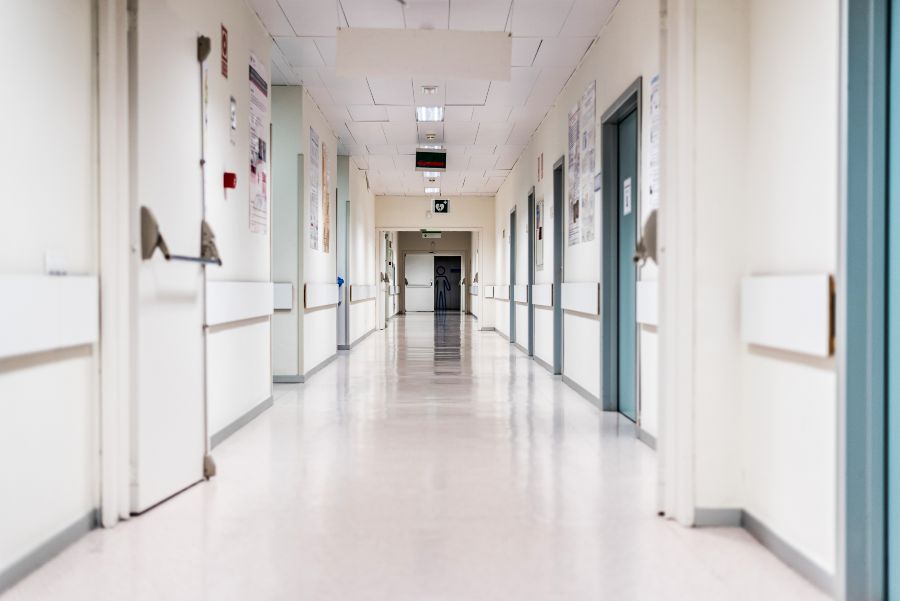
These areas see the most traffic and the most grit. Dirt tracked in from outside scratches the finish and makes floors look tired within weeks. Walk-off mats at the doors, regular dust mopping and machine scrubbing keep the damage down.
Patient rooms and wards
Patient floors need quiet, low-disruption work. Plan cleaning around rounds, meals and visiting. Night scheduling often suits wards better than daytime work, because crews can move through without crowding staff or patients.
Clinics and exam rooms
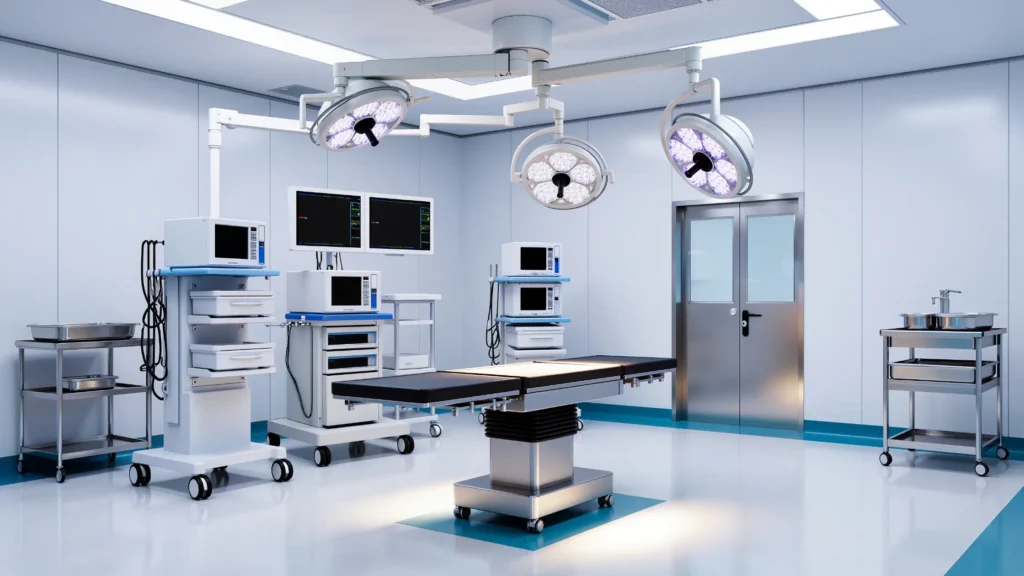
Clinics floor cleaning is a steady job of spills, scuffs and tracked-in dirt. Rooms are small, so crews work in short passes and need to leave doors, carts and equipment as they found them. Agree on a room-by-room routine with your lead nurse or office manager.
Medical offices
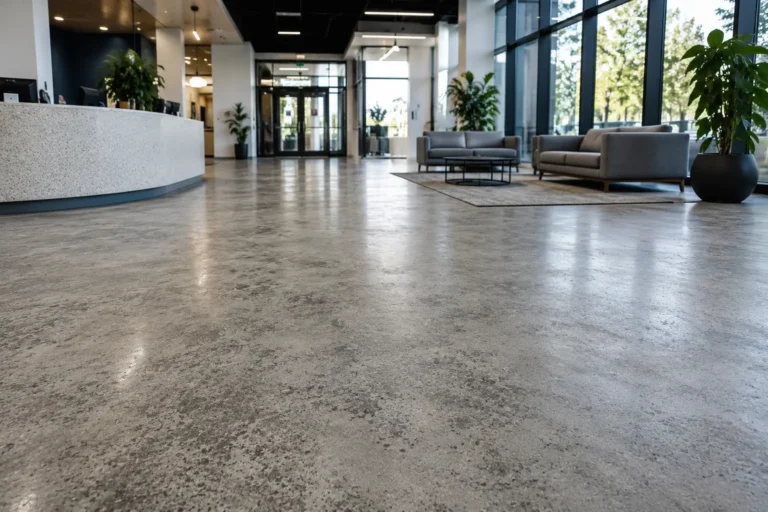
A medical office looks more like a regular office, but patients walk through the same entrance all day. Reception and waiting areas set the first impression. Treat them like a lobby, and treat back offices on a lighter schedule.
Service and back-of-house areas
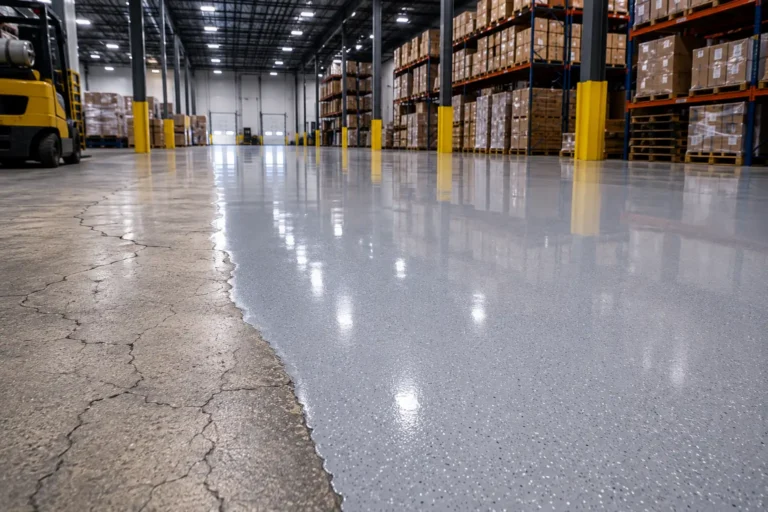
Loading docks, kitchens, laundry and storage corridors carry carts and wet traffic. These floors are often sealed concrete or hard tile. They need scrubbing more often than the public areas, and they need slip resistance checked, not just a clean surface.
Floor cleaning solution in hospitals: what goes on the floor
The right solution depends on the floor, not on a general rule. Vinyl, sealed concrete, tile and rubber each react differently to chemicals and to residue. A solution that works on one can dull or lift the finish on another.
Three points matter more than any label.
- Use only products your facility has already approved. Your safety or infection prevention team owns that list, and a contractor should work from it.
- Match the solution to the floor type and to the finish on top of it.
- Rinse and remove residue. Leftover solution leaves floors slick and pulls dirt back in.
Ask any contractor how they choose a solution for each floor, and ask them to put it in writing. If they cannot answer by floor type, keep looking.
How often should hospital floors be cleaned
There is no single schedule. How often hospital floors should be cleaned depends on traffic, soil load, floor type and your own written protocol.
Entrances and corridors need the most frequent attention. Low-traffic rooms need less.
On infection questions, your infection prevention team sets the standard for what must be cleaned and how often. A floor care contractor should run the floor work to that document and report back, not replace it.
A workable rhythm has three layers.
- Daily cleaning: dust mopping, wet mopping or machine scrubbing in every zone, at a frequency set by traffic.
- Periodic deep work: machine scrubbing of heavy-use areas and corridors on a regular cycle.
- Scheduled restoration: scrub and recoat, or strip and wax, when the finish wears through.
Hospital floor care beyond daily cleaning
Daily cleaning keeps floors tidy. It does not fix a finish that has worn through, and it does not remove the dirt packed into pores and grout. That takes periodic work.
Scrub and recoat. A machine scrub removes embedded soil, and a fresh coat of finish goes down on top. This is the right call when floors are still sound but have lost their shine and protection.
Strip and wax. When many layers of finish have built up, yellowed or cracked, a scrub and recoat will not fix it. The old finish comes off and new finish goes on.
Burnishing. On floors with a hard finish, burnishing restores gloss between recoats. It suits long corridors and high-visibility areas.
Concrete and tile scrubbing. Service areas and back-of-house floors collect grease and grime that mop cleaning will not lift.
These tasks are loud, wet and disruptive. Schedule them at night or on weekends, one section at a time, so patients and staff keep a clear walking route.
Hospital floor care and flooring replacement
People often ask how often flooring needs to be replaced in a hospital or other healthcare facility. No number fits every building. The material, the traffic and the care it received all change the answer.
Look for signs instead. Replace or repair when seams lift, tiles crack, edges curl or the surface will not hold a finish after proper restoration. A floor that cleans up and holds its finish usually does not need to come out.
Steady maintenance pushes replacement back. That is where a hospital floor cleaning program pays for itself: you protect the floor you already have and plan any replacement on your timeline, not after a failure.
What to ask a contractor before you sign
Ask who is on site at night, how they report problems and how they handle a spill or an urgent request from your staff. Ask how they protect walls, doors and equipment while machines run. Ask for a written scope for each zone.
Then check how they plan around you. A good partner agrees working hours with your facilities lead, keeps walkways open and leaves the area ready for the next shift. Slow, vague answers at this stage usually mean slow, vague work later.
Planning the work in your building
To get an accurate quote, send us the square footage of each zone, photos of the floors, the floor types you have and the hours crews can work. Tell us which areas are most sensitive and where access is limited.
TCS Floors schedules work at night and on weekends, so your staff and patients are not in the way. We build customized maintenance programs around your zones and your protocol, with the heavy work on a planned cycle.
TCS Floors is commercial only, works nationwide and has more than 33 years in the business. Send your details and we will come back with a plan for your building.
Frequently asked questions
How often should hospital floors be cleaned to prevent infections?
There is no single answer. Your own infection prevention team sets the standard and the frequency in writing.
A floor care contractor should work to that document and schedule the floor work around it. Entrances and corridors usually need the most frequent attention.
What floor cleaning solution is used in hospitals?
The solution depends on the floor type and on what your facility has approved. Vinyl, sealed concrete, tile and rubber each need a different approach. Ask any contractor to explain their choice by floor type and to remove all residue after cleaning.
What is the difference between hospital and clinic floor cleaning?
Hospitals have more zones, more hours of use and more service areas. Clinics and medical offices are smaller, but patients still walk through the same entrance all day. Both need a zone plan, a daily routine and periodic deep work.
How often does flooring need to be replaced in a healthcare facility?
It depends on the material, the traffic and the care the floor has received. Replace or repair when seams lift, tiles crack or the floor will not hold a finish after restoration. Good maintenance pushes replacement back.
What should a hospital floor cleaning program include?
A zone map, a daily cleaning routine, a cycle for deep scrubbing, a plan for scrub and recoat or strip and wax, and a schedule that works around patients and staff. It should also name who approves chemicals and who signs off the work.