
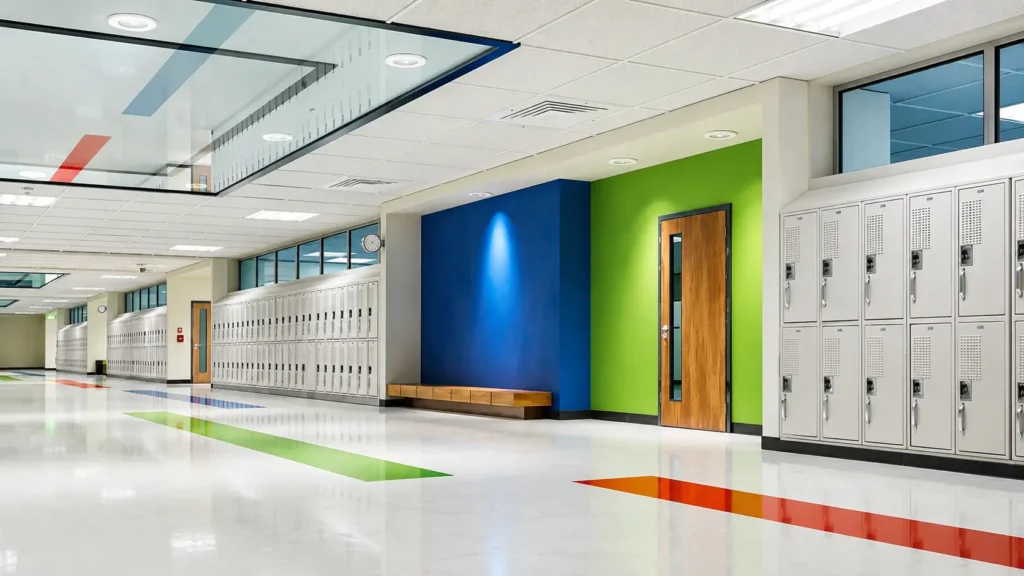
School VCT floors receive constant traffic from students, staff, carts, furniture, events, and daily cleaning. Over time, the protective floor finish can become scratched, discoloured, contaminated, or excessively built up.
Professional VCT stripping and waxing removes the existing finish, prepares the tile, and applies new coats of compatible commercial floor finish.
Here are seven practical benefits for schools and educational facilities.
1. Removes Worn and Contaminated Finish
Routine cleaning removes surface dirt but does not remove layers of damaged floor finish.
Stripping may be needed when the existing finish has:
- Heavy soil buildup
- Uneven gloss
- Yellowing or discolouration
- Embedded marks
- Peeling or poor adhesion
- Excessive buildup around walls and corners
Removing the old finish gives the maintenance team a clean surface for applying a new protective layer.
2. Restores a Cleaner, More Uniform Appearance
School hallways, classrooms, cafeterias, entrances, and common areas often develop visible traffic lanes.
Stripping and refinishing can restore a more consistent appearance by removing worn finish and applying several thin, even coats of new floor finish.
The resulting gloss level depends on the product, number of coats, application method, and ongoing maintenance program.
3. Creates a Renewable Wear Layer
Commercial floor finish creates a sacrificial layer above the VCT.
Foot traffic, chair movement, carts, abrasive dirt, and routine cleaning gradually wear this finish instead of directly affecting the tile surface.
The finish does not repair broken, loose, cracked, or deeply damaged tiles. Those areas should be assessed separately before refinishing begins.
4. Supports Routine Cleaning
A properly applied and maintained finish can make surface soil, minor marks, and routine spills easier to remove.
Results still depend on using:
- Compatible cleaning products
- Correct dilution ratios
- Suitable pads and brushes
- Clean mops and equipment
- Effective entrance matting
- Prompt spill-response procedures
Using excessive detergent or aggressive cleaning pads can dull or damage the finish prematurely.
5. Allows Floors to Be Burnished or Recoated
After a VCT floor has been refinished, it can usually be maintained through regular cleaning, periodic burnishing, and recoating when appropriate.
Burnishing may restore gloss when the finish remains clean and properly bonded. Recoating may renew worn areas before the finish is completely depleted.
This can reduce the need to perform a complete strip and wax every time the floor becomes dull.
Learn more about professional VCT burnishing services.
6. Helps Schools Plan Work Around Breaks
VCT stripping and waxing requires controlled access while the floor is prepared, finished, dried, and returned to service.
Schools can schedule this work during:
- Summer breaks
- Winter or spring breaks
- Weekends
- Teacher workdays
- Building closures
- Renovation periods
Planning the project by building, floor, hallway, or wing can help reduce disruption to school operations.
7. Supports a Consistent Maintenance Program
A documented floor-care program helps schools decide when each area needs cleaning, burnishing, recoating, or complete stripping.
The plan can account for:
- Student and staff traffic
- Floor condition
- School calendar
- Cafeteria and entrance exposure
- Furniture movement
- Cleaning frequency
- Previous finish applications
- Required appearance standards
TCS Floors provides commercial floor maintenance programs for schools and multi-building facilities.
How Often Should School VCT Floors Be Stripped and Waxed?
There is no universal schedule for every school.
The appropriate interval depends on traffic, floor condition, finish buildup, cleaning procedures, operating calendar, and maintenance history.
A floor may only need cleaning or burnishing when:
- The existing finish remains properly bonded
- Soil can still be removed
- Wear is limited to the surface
- There is no excessive buildup or discolouration
Complete stripping may be appropriate when the finish is peeling, contaminated, uneven, heavily built up, or no longer responds to routine maintenance.
The floor should be inspected before additional finish is applied.
Plan VCT Floor Care Around Your School Calendar
Professional VCT stripping and waxing can restore appearance, remove worn finish, and establish a renewable surface that supports ongoing maintenance.
TCS Floors provides nationwide VCT stripping and waxing services for schools and educational facilities.
Commercial facilities only. Residential floor services are not provided.
Request an instant quote or call 866-607-8659 to discuss your school’s floor-care schedule.
Frequently Asked Questions
What does VCT stripping and waxing involve?
The process generally involves removing the existing finish, recovering the stripping solution, cleaning and preparing the tile, and applying several thin coats of compatible commercial floor finish.
How often should schools strip and wax VCT floors?
There is no fixed schedule. Frequency depends on traffic, floor condition, finish buildup, cleaning practices, and the school calendar. An inspection should determine whether the floor needs burnishing, recoating, or complete stripping.
Can VCT floors be recoated without stripping?
Yes, when the existing finish remains clean, compatible, and properly bonded. The floor must be prepared correctly before additional finish is applied.
Does stripping and waxing repair damaged VCT?
No. It does not repair broken, cracked, loose, or deeply damaged tiles. Repairs should be completed separately before refinishing.
Can school floor work be completed during breaks?
Yes. Summer, winter, and spring breaks often provide useful service windows. The required time depends on square footage, floor condition, number of coats, drying conditions, and access requirements.