
Commercial concrete floor maintenance comes down to four tasks: keep grit off the floor, clean it on a set schedule, protect the surface with the right sealer or guard, and repair small problems before they spread. Concrete is durable, but durable does not mean maintenance free. A floor that is left alone wears, stains and dusts.
This guide covers daily care, deep cleaning, sealing, polished concrete upkeep, crack and joint repair, and what to do when cleaning is no longer enough. It is written for the person who is accountable for the floor, not for the crew running the machine.
Start with what is on the concrete
The right care depends on the surface. Sealed concrete, unsealed concrete, polished concrete and coated concrete each need a different routine.
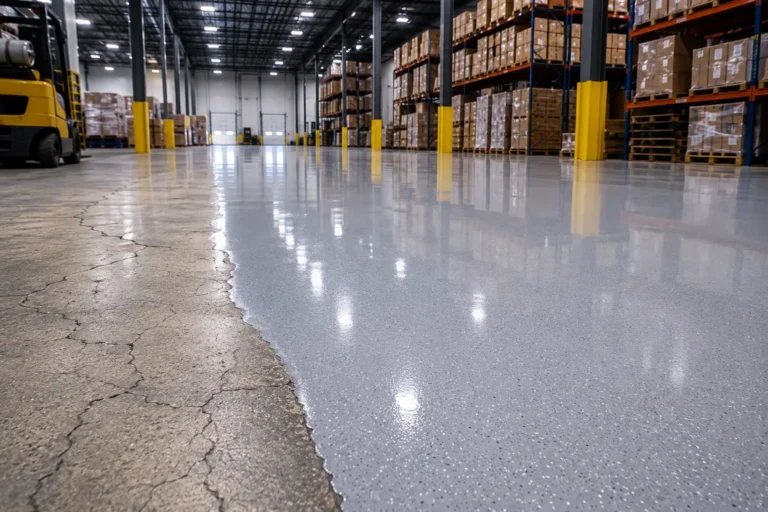
- Unsealed concrete is porous. It absorbs oil and liquids, stains easily, and can release dust. Most of its maintenance problems come from this, so the first improvement is usually sealing.
- Sealed concrete needs cleaning with products that suit the sealer, and the sealer will wear and need renewing.
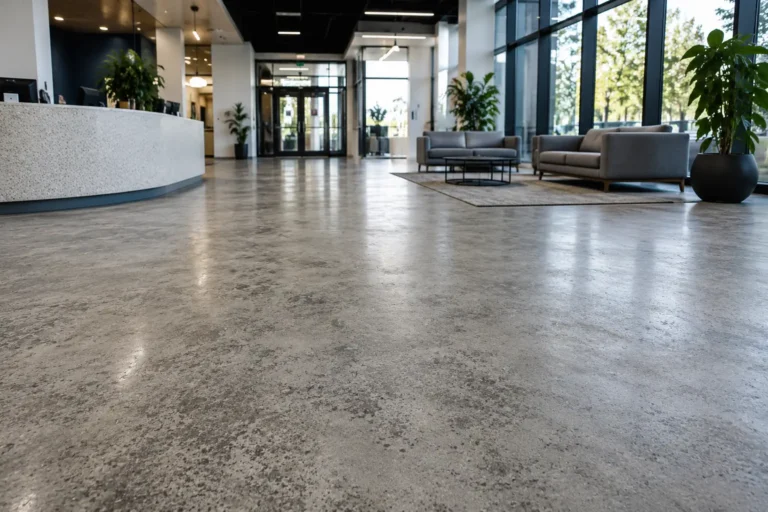
- Polished concrete is mechanically refined and usually guarded. It needs gentle cleaning and periodic professional attention. Our page on commercial concrete polishing explains the process.
- Coated concrete should be cleaned and maintained as the coating manufacturer directs.
If you do not know which you have, a contractor can usually tell from a short inspection and a few simple tests.
Daily and weekly concrete floor care
Routine cleaning removes the grit that does most of the damage. Dirt on concrete acts like sandpaper under foot and wheel traffic.
- Control what comes in. Use entrance matting and keep it clean. Most of the soil on a floor is tracked in.
- Dust mop or sweep every day. Use vacuums or sweepers where debris is heavy.
- Auto scrub or damp mop on a set cycle. Daily in high-traffic areas, weekly in quieter ones. Let traffic decide.
- Use a neutral cleaner. Strong acids and harsh degreasers can etch concrete and strip sealers. Use the dilution on the label.
- Recover dirty solution. Do not let it dry on the floor. Change the water when it turns gray.
- Clean spills fast. Oil, coffee, chemicals and dyes soak into unsealed concrete quickly.
Write these tasks down for your cleaning crew or vendor. Concrete floors fail from skipped basics more often than from anything unusual.
Deep cleaning and scrubbing
Routine cleaning does not reach everything. Over time, soil settles into the surface and shows up as dull lanes, gray patches and dark edges.
A deep clean uses a machine with the right pad or brush, a suitable cleaner, and full solution recovery. In some conditions it may include pressure washing.
Schedule deep cleaning by traffic and soil, not by calendar. A food service area, a school corridor and a distribution center will not need it at the same rate. A customized maintenance program sets this rate for your building and adjusts it when conditions change.
After a deep clean, check the sealer. If water soaks in instead of beading, or the surface looks dry and stained again soon after cleaning, the protective layer is gone or worn.
Sealing and resealing
A sealer is your main defense against stains, moisture and surface wear. Sealers come in several types.
- Penetrating sealers soak in and protect without changing the look of the surface.
- Acrylic sealers form a film, give a gloss and are easy to renew.
- Epoxy and other coating systems give a heavier layer with more chemical and abrasion resistance.
The right one depends on traffic, chemical exposure, moisture and the look you want. Sealers wear, so plan for resealing.
Our page on concrete sealing explains the options. If your floor is unsealed and stains, dusts or is hard to keep clean, sealing is the most common fix.
Maintaining polished concrete
Polished concrete is the lowest-maintenance concrete finish, but it still needs care. Dust mop and clean with a product that is compatible with the polish and the guard.
Avoid acidic and strongly alkaline cleaners, and avoid aggressive pads. Burnishing refreshes the sheen where traffic dulls it, and a periodic professional visit can renew the guard or hone the surface again.
Do not put floor wax on polished concrete unless the polishing contractor says it is suitable. Wax turns a floor that needs light maintenance into one that needs stripping and recoating.
Cracks, joints and surface damage
Cracks are common in concrete. What matters is what they do.
A small crack can be repaired once someone has found the cause and judged whether it is structural or on the surface. An open crack or damaged joint collects dirt and moisture, chips at the edges, and becomes a trip or cart hazard.
Professional crack repair follows a standard order.
- Assess the crack, its cause and its extent.
- Clean out dirt, debris and loose concrete.
- Route the crack where needed, so the repair material can bond.
- Fill with a suitable epoxy, polyurethane or cementitious repair product.
- Smooth and finish the repair to match the surrounding floor.
Pitting, spalling and broken joint edges need attention for the same reason. Walk the floor on a set schedule, take photos of what you find, and fix small defects before they spread.
Concrete floor troubleshooting
When a floor misbehaves, match the symptom to the likely cause before you buy another product.
- Dust on shoes and surfaces. Often a worn sealer or a weak surface. Cleaning more will not fix it. Consider sealing or dustproofing.
- Dull, gray traffic lanes. Soil and worn sealer. Deep clean, then reseal or refresh the guard.
- Oil and grease stains. Treat quickly. Deep stains need professional extraction and may remain visible on unsealed concrete.
- Peeling coating or film. Moisture, contamination or poor prep. Find the cause before recoating.
- White haze or damp patches. Moisture moving through the slab. Investigate the source.
- Slippery spots. Residue from cleaners, sealer buildup or a surface that is too smooth for the use. Review products and consider a traction option.
When maintenance is not enough
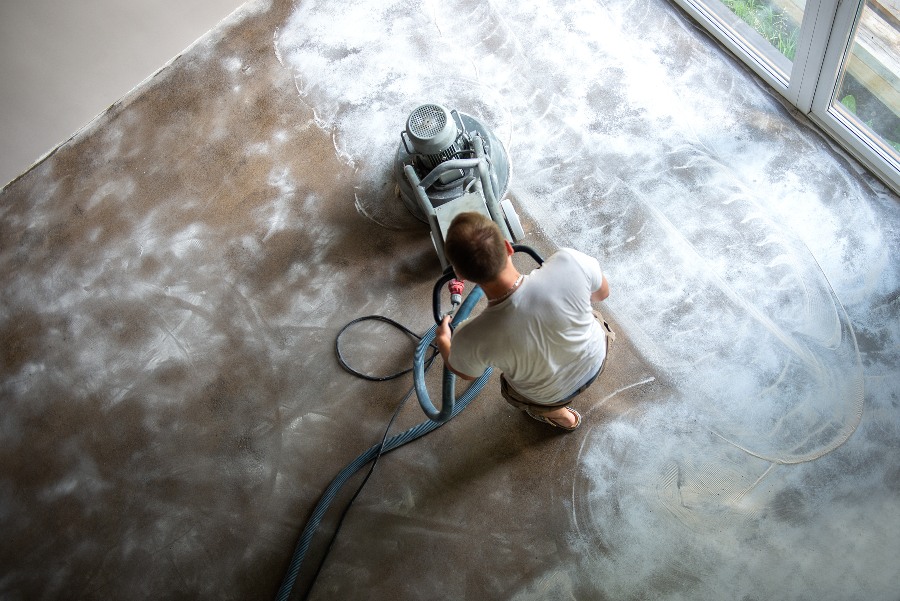
If thorough cleaning no longer gives an acceptable result, the floor may need more than upkeep. Grinding levels and smooths the surface and prepares it for polishing or coatings.
Staining or a coating system can change the look and the performance. For widespread wear, cracking or damage, concrete restoration is the better move than more cleaning.
Make that call on evidence. Compare what the floor looks like after proper cleaning with what you need it to do.
Planning the work in your building
To get a quote or a maintenance plan, send us the square footage, photos of the floor, the floor type and anything you know about the sealer or coating, and the hours the space is open. Tell us about oil, chemicals, moisture or heavy equipment.
TCS Floors schedules concrete work at night and on weekends, and builds customized maintenance programs that set cleaning, deep cleaning and resealing around how your building operates. We are commercial only, work nationwide, and have 33+ years in commercial floor care.
Frequently asked questions
How often should I clean my commercial concrete floor?
Dust mop daily and auto scrub or damp mop on a cycle set by traffic: daily in busy areas, less often in quiet ones. Deep clean when soil builds up in lanes and edges. Regular inspections show whether the schedule needs to change.
How do I maintain an unsealed concrete floor?
Keep grit off it, clean with a neutral cleaner, and wipe up spills at once. Because unsealed concrete is porous, it stains and dusts easily, so most facilities seal it. A contractor can recommend a sealer for your traffic and chemicals.
What is the difference between concrete polishing and concrete grinding?
Grinding is the first step. It levels and smooths the surface with coarse diamond tooling and prepares it for other work. Polishing follows with finer abrasives to refine the surface and bring up sheen.
Can you remove stains from a concrete floor?
Often yes. The method depends on the stain, how long it sat, and whether the concrete was sealed. Oil and grease on unsealed concrete may need professional treatment, and some stains can only be reduced.
What causes cracks in concrete floors, and can they be repaired?
Settling, temperature changes, shrinkage and installation problems all cause cracks. Most can be repaired once the cause is understood. The crack is cleaned, filled with a suitable repair product, and finished to match the floor.
How do I maintain polished concrete floors?
Dust mop daily and clean with products made for polished concrete. Avoid harsh chemicals and aggressive pads. Burnish when sheen drops, and schedule periodic professional care for the guard or surface.