


How do you clean a commercial concrete floor?
First check what is on the floor: oil, dust, chemicals or tire marks. Then pick a cleaner and machine that match, pressure wash where drainage allows, scrub and recover the dirty water, and follow with a daily and weekly plan. Run deep cleaning between shifts.
- First step
- Check what is on the floor
- Pressure washing
- Can strip acrylic sealers
- Timing
- Deep clean between shifts
To clean a commercial concrete floor, first check what is on it: oil, dust, chemicals or tire marks. Then pick a cleaner and machine that match, pressure wash where drainage allows, scrub and recover the dirty water, and follow with a daily and weekly plan.
Plants, warehouses and shops get the best results when the deep cleaning runs between shifts.
Analyze, Assess, Plan Accordingly
The very first thing you should do is take a good look at things. In other words, you have to go over your facility and examine the floor thoroughly. Why does this even matter, you ask? Well, for starters, you get to familiarize yourself with the layout of the entire floor.
This will help you determine how dirty the floor is, whether or not there are any hard stains or damages to the floor, and last but certainly not least, you’ll determine if there are any shelves or machines that cannot or should not be moved.
If so, you’ll have to figure out a way to clean around them. Now that you’ve analyzed the situation, it’s time to assess how to clean the floor and with what. For example, chemical or oil stains that have been neglected for a while won’t come off easily.
You may need a specific cleaning solution that works as a degreaser and an industrial sweeper with strong enough brushes to remove those stains. In any event, knowing what you’re facing will help you plan accordingly and prepare everything in advance, so that you don’t have to improvise on the spot.
Why Traditional Cleaning Methods Don’t Work on Commercial Concrete Floors?
You might’ve gotten an idea that sweeping the floor with a broom and then washing it with a mop, warm water, and some cleaning agent will do the trick. It won’t, so don’t even bother going down that rabbit hole.
The only situation when that approach is feasible is when you have a recently cleaned concrete floor that just received a fresh coat of epoxy concrete sealer, for instance. Sweeping and mopping the floor is then considered regular maintenance until the floor gets dirty enough again to require commercial cleaning.
As mentioned before, heavy foot and vehicle traffic, various spills, and impact damage cannot be remedied with traditional cleaning methods. It would simply take too much time and effort to even come close to what industrial sweepers and scrubbers can do in an hour.
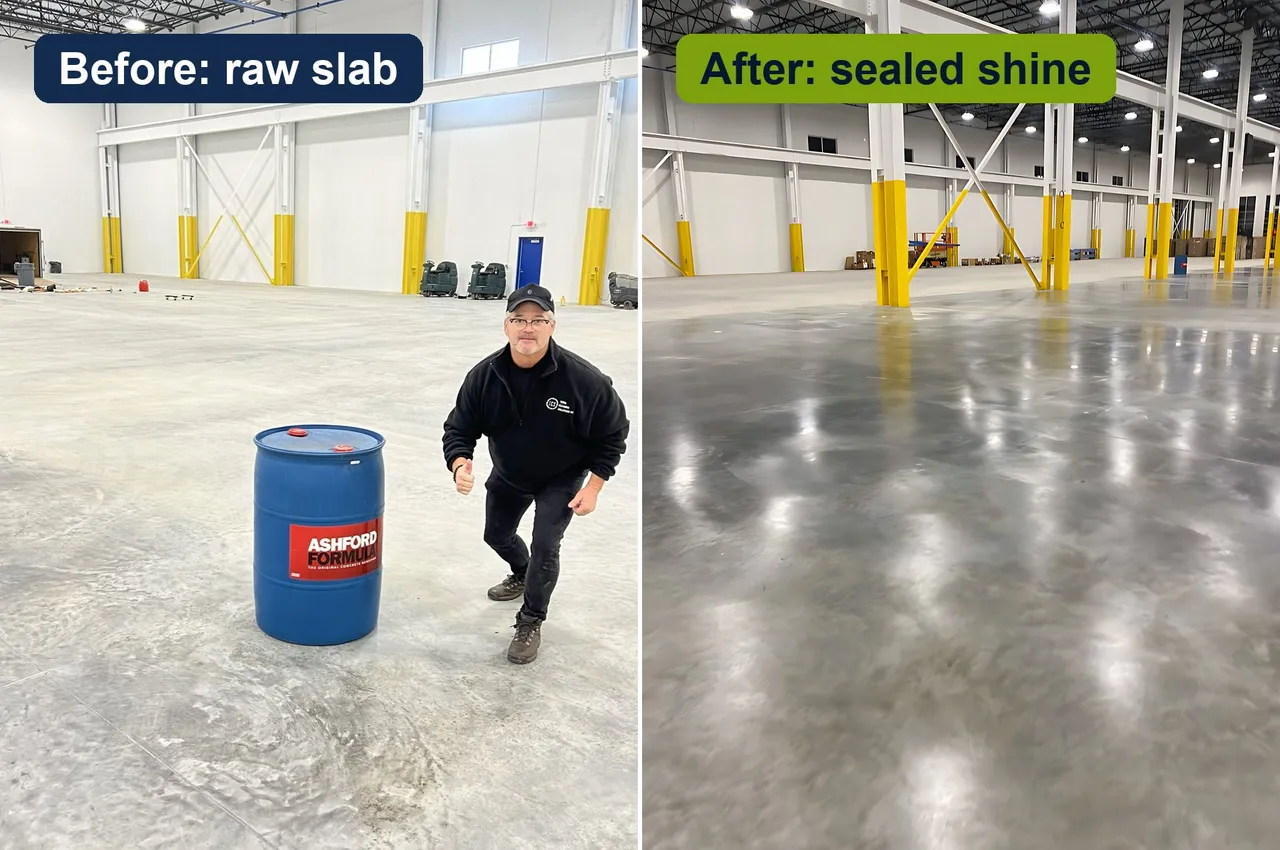
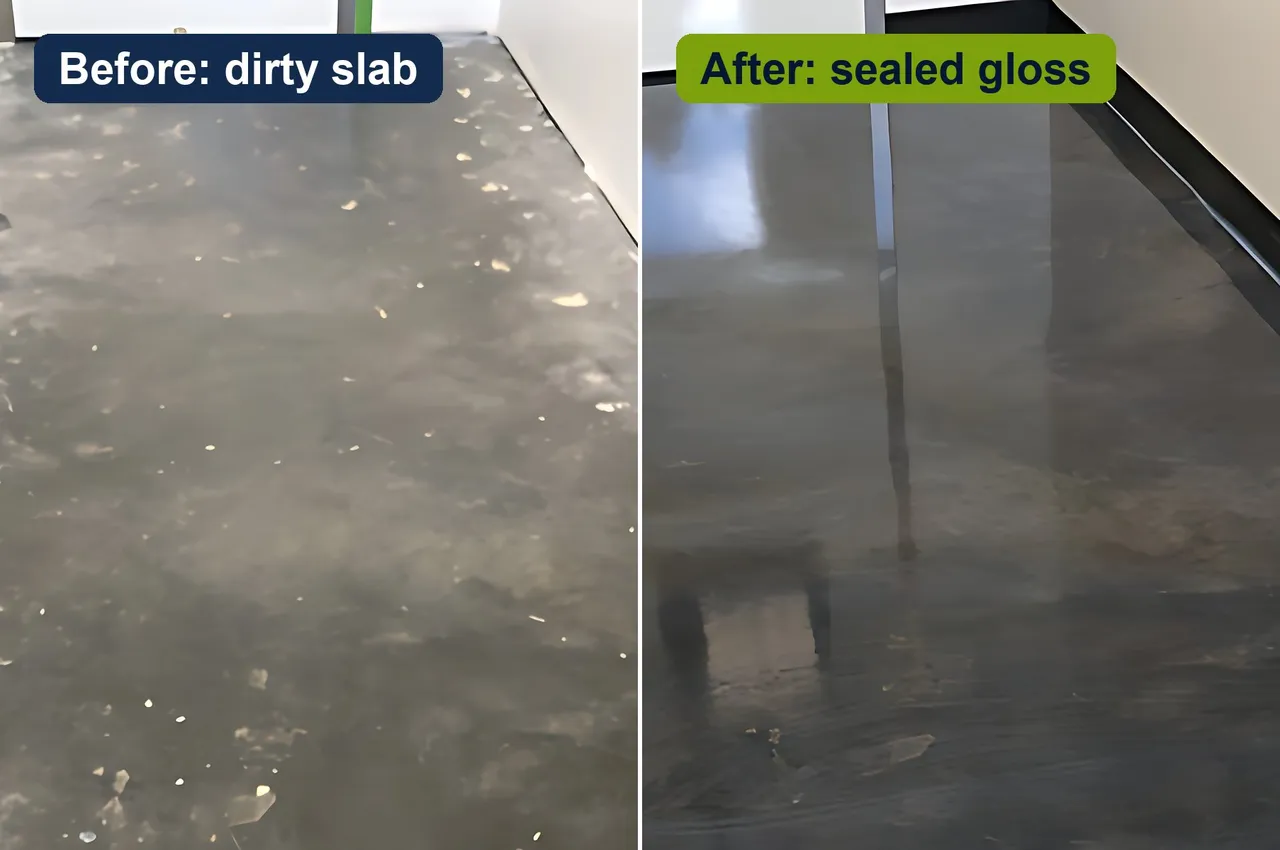
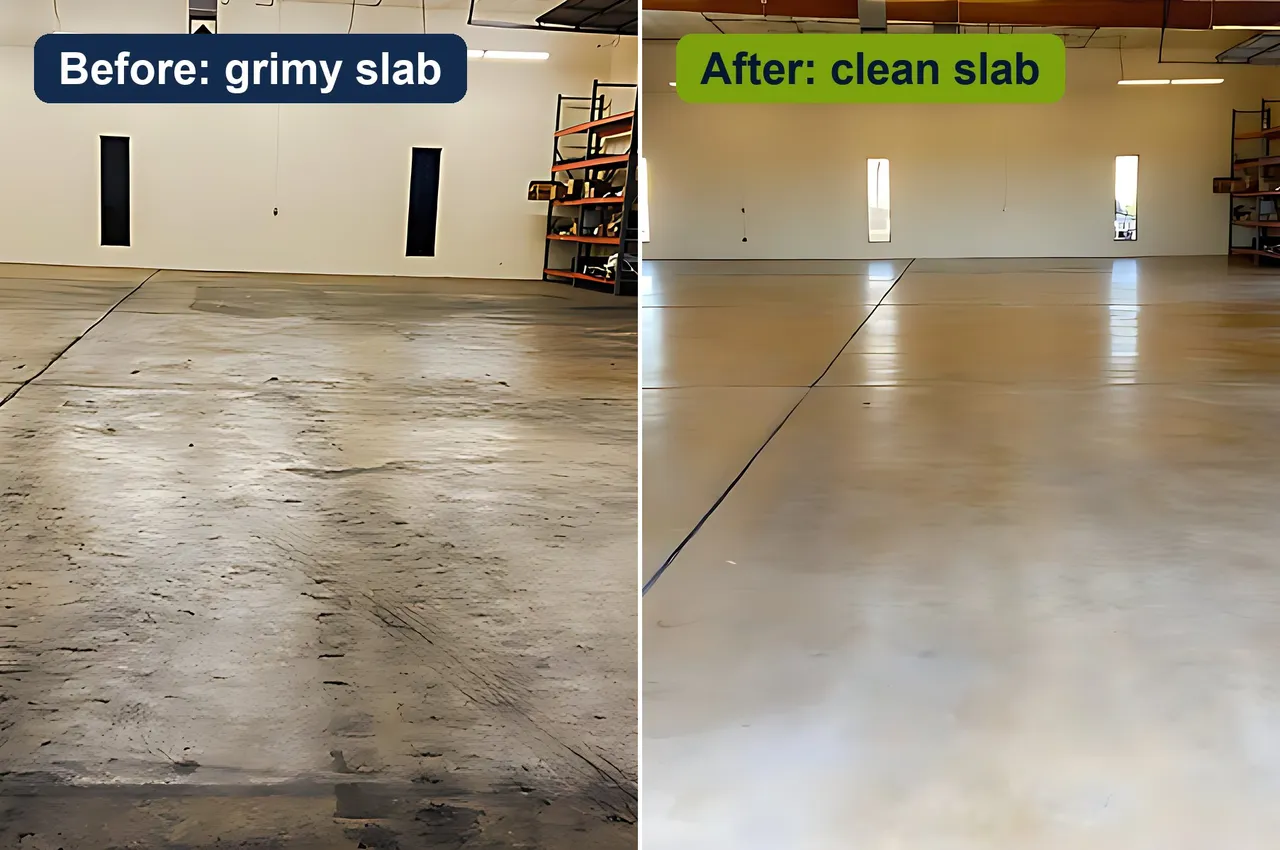
From dirty slab to clean floor
Four steps, in order.
Pressure Washing When Possible
Cleaning your facility’s concrete floor requires a specific approach. It all comes down to the layout of the facility and how fast you must get the cleaning process done to ensure a quick return to service.
That said, if the situation allows it, meaning if there is a wide open space in the facility with no electronics or other sensitive equipment nearby, you can always opt for pressure or power washing.
High-pressure water and steam can easily remove any dirt, grime, and hard stains. What’s more, it’s kinda satisfactory to watch it all disappear as you blast the dirt away. However, this method is quite messy and requires additional cleaning to remove the dirty water you’ve left in your wake.
Also, and this is very important, pressure washing can strip layers of concrete sealers if too much pressure is used. For example, the acrylic concrete sealer is often used indoors throughout various commercial and industrial facilities due to its cost-effectiveness and ease of application.
However, this type of sealer isn’t as resistant as others and can easily be damaged by power washing concrete, so keep that in mind if you opt for this method.
Check your sealer before you power wash. Acrylic sealer can be damaged by too much pressure.
Use the Proper Equipment
If you want to clean your concrete floor the right way, you’ll need proper equipment to do so. As mentioned before, facility floors aren’t your typical floors. This isn’t your kitchen where you might’ve spilled a bit of tomato sauce you’ve just made, so you’ll need to put a little back into it to scrub it off.
Facility floors experience dirt and stains that are on a whole new level. That’s why professional commercial cleaning is required more often than not. Moreover, facility floors have a much larger surface area that needs to be cleaned, and you simply can’t do that with conventional methods.
What you need are industrial scrubbers and sweepers. First of all, walk-behind or driven scrubbers and sweepers have a much greater capacity for covering large areas in less time. Secondly, their cleaning capabilities far surpass those of brooms and mops.
Sure, there are places where scrubbers and sweepers simply can’t fit, granted. But the point in fact is that you cannot clean a facility floor without proper tools, and those tools vary based on circumstances.
That said, even concrete floors with vinyl composite tile covers that are easy to maintain might need concrete degreasing or even a specific concrete stain removal method.
Match the tool to the floor
What is on the slab decides the equipment.
| On your floor | What works |
|---|---|
| Old oil or chemical stains | A degreaser and an industrial sweeper with strong brushes |
| Large open areas | Walk-behind or driven scrubbers and sweepers |
| Open space with no sensitive equipment nearby | Pressure or power washing, then pick up the water |
| Pitting or damaged coating | Grinding or brushing the spot, then replacing the coating |
After Cleanup Maintenance
The cleaning is finished, but the job isn’t done yet. Every floor needs to be properly maintained so that it can continue to serve its purpose for years to come. Now, maintenance doesn’t just mean regular cleaning.
In fact, you have to keep an eye on the floor for any pitting or other damage. If you do notice anything unusual, consider grinding or brushing the area to remove the coating or sealer and replace it.
This doesn’t mean you’ll have to reseal or wax the entire floor, just the area that is likely to grow into a more serious problem due to damage if left unattended. This way, you’ll ensure that your facility floor is clean, safe, and able to last for a very long time, no matter what goes on in the facility.
Three habits keep the floor in shape.
Watch for pitting
Keep an eye out for pitting or other damage.
Fix only the damaged area
Grind or brush the spot to remove the coating or sealer.
Replace what you removed
You do not need to reseal or wax the whole floor.
The Best Concrete Floor Cleaning with TCS Floors
Cleaning an entire facility floor isn’t as easy as many people believe it to be. If you don’t think you can manage on your own, or you may not have the necessary equipment to do so, you should consider hiring some professional assistance.
Here at TCS Floors, we know how to clean and maintain concrete floors, and we’re good at it, especially after more than 33 years of experience. We take our job very seriously, and we’re dedicated to providing you with the best result possible at a reasonable price.
In fact, our custom pricing program guarantees that we’ll be able to meet your needs and fit into your budget. Therefore, don’t hesitate to go over our previous work and reach out to us today so that we can get your facility floor back into tip-top shape.
Concrete floors TCS has scrubbed
Square feet per job, from TCS job records.
Also listed on concrete scrubbing and cleaning.
Final Thoughts:
Thinking that concrete floor cleaning is simple will have you questioning your judgment once the process begins. But no matter how dirty or grimy the floor is, it can be properly cleaned with the right tools, supplies, and know-how.
All you have to do is analyze the situation thoroughly and plan for what comes next accordingly. That way, your concrete floor will always be squeaky clean and your facility a safe environment.
FAQ:
What is the best thing to clean concrete floors?
It all depends on the circumstances, such as how dirty the floor is, what coating or sealer is used, and whether or not the floor has sustained any serious damage.
Either way, the best thing you can do is to analyze the situation and decide how to best approach the cleaning process.
What is best for cleaning concrete?
The best solution for cleaning concrete depends on the state of the concrete. In most cases, pH-neutral cleaning solutions, sweepers or scrubbers with non-abrasive brushes or pads, and microfiber cloths work best for keeping the concrete clean in most situations.
Should you mop a concrete floor?
Yes, of course. Mopping a concrete floor is a part of the everyday maintenance and it shouldn’t be skipped. This is how you keep the floor clean at all times.
However, mopping won’t prevent hard stains or damage to the floor. Those situations are simply inevitable, especially in facilities and similar commercial or industrial spaces. When that happens, commercial cleaning replaces mopping.
How do you make old concrete floors look new?
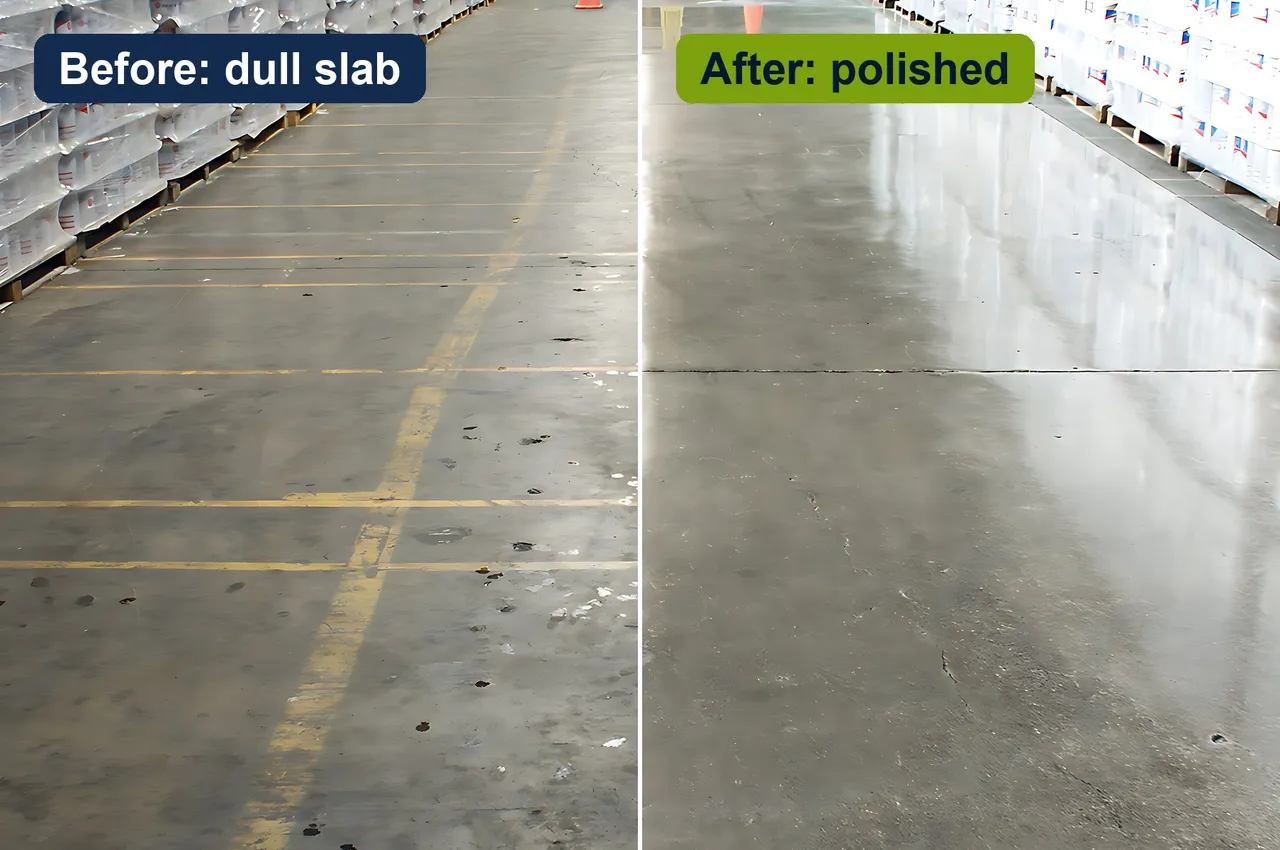
You can breathe new life into pretty much any concrete floor, no matter how dirty or damaged it may be. Depending on the situation, you may have to grind the concrete floor to even out any cracks or pits.
After that, applying a sealer should remedy any remaining pores that grinding couldn’t fix. Lastly, polishing the floor or applying a topcoat will make it look as good as new.