

To clean warehouse concrete floors, sweep or vacuum first, then scrub with an automatic scrubber and a cleaner matched to the floor. Treat oil and tire marks with a degreaser, recover all the water, and let the floor dry before forklifts return. Then keep it clean with a daily, weekly and periodic routine.
This guide covers the full job for a warehouse or manufacturing floor: floor types, cleaning methods, degreasing, concrete dusting, schedules, safety and when to bring in a contractor.
Why warehouse concrete floor cleaning matters
The floor is the most used asset in the building. Forklifts, pallet jacks and people all depend on it, and a dirty floor slows every one of them.
- Safety: dust, oil and debris cause slips, and clean floors keep safety markings visible.
- Equipment: grit wears wheels and bearings, and dirty floors mean more repairs and more downtime.
- Air and inventory: concrete sheds fine dust as it wears. That dust lands on product and in equipment.
- Floor life: oil, chemicals and wear stain and break down unprotected concrete.
- First impression: customers, auditors and insurers judge how a building is run by the floor.
If your floor needs more than routine work, professional industrial floor cleaning services bring the machines and the process for it.
Know your floor before you clean it
The right method depends on the surface. A cleaner that is fine for raw concrete can damage a coating.
- Raw concrete: porous, so it absorbs oil and chemicals. It can take stronger cleaners and mechanical agitation, and it benefits from sealing.
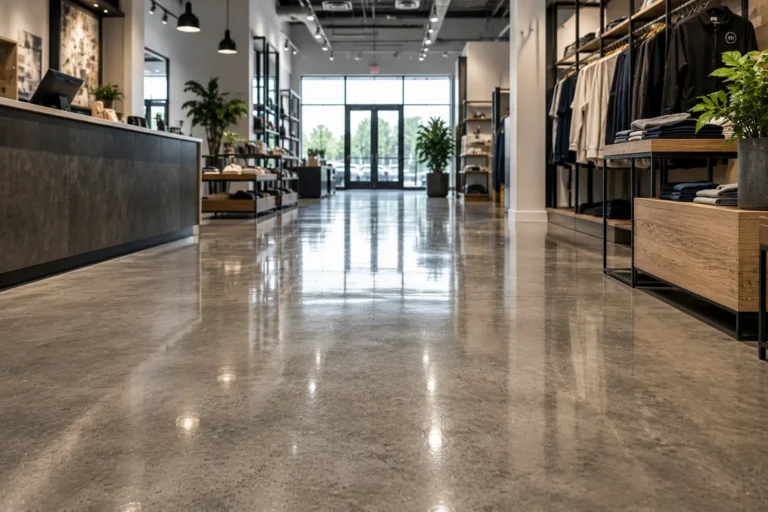
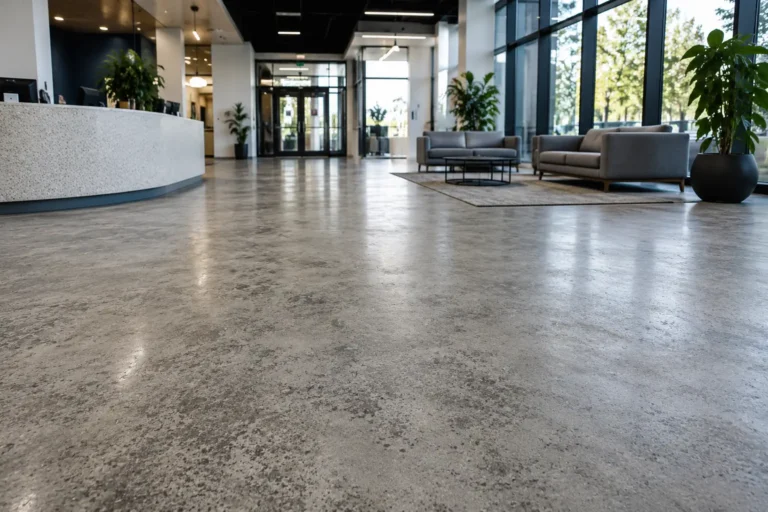
- Sealed or polished concrete: less porous and easier to clean. Use neutral cleaners and soft pads. Harsh methods dull the finish.
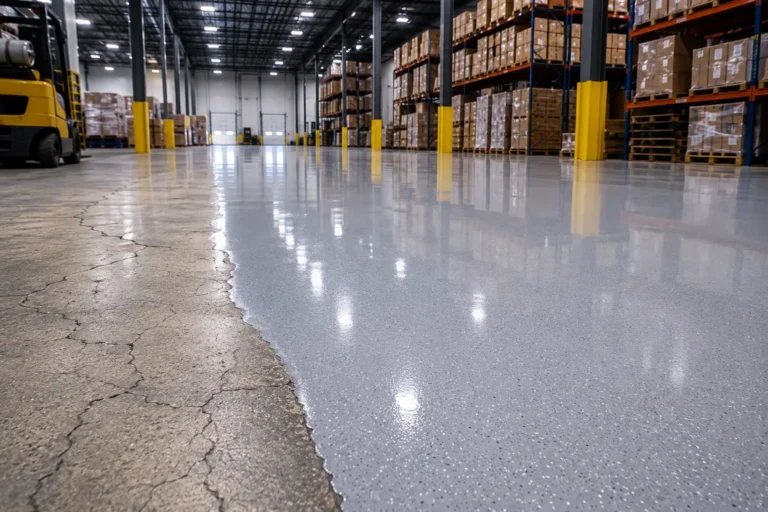
- Epoxy or polyaspartic coatings: durable and chemical resistant. Strong solvents and abrasive pads can haze or wear them.
- Specialty surfaces such as terrazzo or rubber: follow the product and method the surface maker recommends.
Whatever the surface, test any new product in a small, hidden spot first.
How to clean warehouse concrete floors
Match the method to the soil. Quick daily care and deep cleaning use different tools. For heavy buildup on raw concrete, concrete scrubbing is the next step up.
Dry cleaning and debris removal
Dry cleaning lifts grit and dust before they scratch a coating or turn into a slick film when damp. It is the fastest way to keep aisles safe, and it prepares the floor for any wet step.
Use push brooms and dust mops in small zones and along edges. Use walk-behind or ride-on sweepers in large aisles. Where concrete dust is common, use industrial vacuums with HEPA filters to pull dust from joints, corners and pallet lanes.
Start in cleaner zones and move toward dirtier ones, so you do not track dust back. Overlap passes.
Vacuum expansion joints, dock plates and the floor under low racking on a routine. Replace worn broom heads and sweeper brushes, since worn ends push dust around instead of lifting it.
Wet cleaning and auto scrubbing
Move to wet cleaning when you see tire residue, a gray film after sweeping, or buildup that raises slip risk. It is also standard in food, packaging and hygiene-sensitive zones.
An auto scrubber with soft pads or nylon brushes cleans and recovers in one pass. Sealed and coated floors pair best with soft pads or light brushes.
Raw concrete can take a medium brush. Good squeegee blades prevent streaks and leftover slurry.
Pre-treat heavy soil with a light spray and a short dwell. Set the solution flow so the floor stays wet under the head without puddles. Two slower passes, one to scrub and one to recover, beat one fast lap.
In tight rooms a mop and bucket still works. Use two buckets and change the water often so you do not spread grime.
Warehouse floor degreasing
Degreasers matter most in maintenance bays, charger stations, dock approaches and forklift turning areas, where oil, hydraulic fluid and rubber collect.
Use a heavy-duty degreaser on raw concrete. On polished, sealed or coated floors, use pH-neutral or low-alkaline products that the floor system allows. Apply evenly and let it dwell long enough to break the bond, but not dry.
Agitate with a brush or the scrub head. Extract with the scrubber or a wet vacuum, rinse with clean water, and extract again. This last sequence removes the residue that leaves a floor slick.
Strong solvents can cloud epoxy or soften some sealers, so test first. Collect and dispose of oily wastewater according to local rules.
Dilution and dwell time
- Heavy-duty cleaning (spill zones, tire marks): 5 to 10 minutes, kept wet. Scrub, extract, rinse, extract again.
- Routine auto scrubber runs (daily or weekly): 2 to 5 minutes on a slow first pass, then a recovery pass. Pre-treat heavy spots.
- Light maintenance (dust film, light soil): one scrub pass, then a recovery pass. Burnish polished floors after they dry.
Do a white towel test after cleaning. If the towel comes up gray, increase dwell time or concentration.
If the floor is slick after drying, rinse more or reduce concentration. Change the solution when the recovery water turns dirty quickly.
Concrete dusting in a warehouse
Concrete dusting is a fine powder that appears on the surface of unsealed or worn concrete. It rises with every forklift pass and settles on product, racking and equipment. Sweeping and vacuuming remove it, but it returns, because the surface itself is breaking down.
Control it in two steps. First, remove the dust with vacuums that have proper filtration, since dry sweeping lifts it into the air. Then treat the cause.
Densifiers, sealers or polishing close the surface so it stops shedding. Frequent return of dust after cleaning is the sign that cleaning alone is not enough.
The same applies to manufacturing concrete floor cleaning, where dust mixes with oil and process residue. Remove the contaminant, then protect the surface. Our warehouse floor cleaning page explains how we approach this on site.
A cleaning schedule that keeps the floor under control
- High-traffic aisles: sweep or scrub several times in a shift, as soil load requires.
- Receiving and staging areas: a pass at the end of each shift.
- Low-traffic storage rows: daily or every other day.
- Joints, dock plates and under low racking: vacuum daily in dusty sites and weekly in lighter ones.
- Spills: clean at once, and keep spill kits where leaks happen.
- Entrances: use matting to stop dirt tracking in.
- Deep scrubbing and inspection: on a set cycle, before buildup shows. Check for cracks, joint damage and worn sealer while you are there.
Check this week where soil collects fastest in your building. That area sets the cleaning rhythm for the rest.
Safety when cleaning a warehouse floor
- Use the right chemicals. Pick neutral cleaners for coated or polished concrete. Follow dilution instructions. Avoid bleach and strong acids on sealed floors. Add chemical to water, not water to chemical, label containers, and keep safety data sheets on hand.
- Mark and secure the area. Use signs, barriers and cones, and keep one supervisor watching the zone until it is dry.
- Protect workers. Provide gloves, goggles and non-slip footwear. Ventilate enclosed spaces when you use strong degreasers.
- Control water. Over-wetting raises slip risk and can harm unsealed concrete. Use scrubbers or wet vacuums that recover water, and keep mop water clean.
- Schedule around operations. Deep clean when machine traffic is low. In 24/7 buildings, clean in sections so work can continue.
Polishing, sealers and coatings
Cleaning keeps a floor clean. Protection makes it easier to keep clean. Penetrating sealers reduce absorption on raw concrete and make spills easier to remove.
Diamond grinding and polishing level minor defects and form a dense, glossy surface that resists dusting. Burnishing then restores gloss in busy lanes. Epoxy and polyaspartic coatings resist chemicals and wear, and they keep safety striping sharp.
Surface preparation decides how long a coating lasts. Poor prep leads to peeling and early wear. Plan traffic closures and re-striping before the work begins.
Planning the work in your building
For many warehouses, the best mix is staff handling daily sweeping and spills, and a contractor handling deep cleaning, restoration and protection. To get a quote, send the approximate square footage, photos of the floor, the floor type and the working hours available.
We schedule at night and on weekends, so product keeps moving. We build customized maintenance programs around your traffic and soil, so the floor stays on a plan and does not wait for a problem.
TCS Floors serves commercial and industrial buildings only, works nationwide, and has 33+ years in commercial floor care.
Frequently asked questions
How do you clean warehouse concrete floors?
Sweep or vacuum to remove dust and debris. Scrub with an auto scrubber and a neutral cleaner, and use a degreaser where there is oil. Rinse, recover the water, and let the floor dry before traffic returns.
What is the best way to clean a concrete floor?
It depends on the condition. Light soil responds to a neutral cleaner and an auto scrubber.
Heavy buildup needs a degreaser or professional cleaning. Sealed and coated floors need non-abrasive products.
How do you keep a warehouse floor clean?
Set a daily routine of sweeping or vacuuming, clean spills at once, and use mats at entrances. Schedule machine scrubbing before buildup shows.
How do you stop concrete dusting in a warehouse?
Vacuum the dust with proper filtration, then close the surface with a densifier, sealer or polish. Cleaning alone does not stop dusting, because the surface keeps breaking down.
How do you make a warehouse floor shine?
Polished concrete shines when it is burnished regularly or refined with diamond polishing pads. A protective sealer adds gloss and resists stains. Non-abrasive daily cleaning keeps it bright.
Can warehouse floors be cleaned without stopping operations?
Yes. Work can be done at night, on weekends or in sections, so aisles and docks stay in use.