


How long does commercial floor wax last?
Commercial floor waxing has no standard lifespan. The finish may last several months in a low-traffic area but wear much sooner in entrances, corridors and cafeterias. Floor wax does not expire on the floor. It wears out. Traffic, soil, coats and cleaning matter more than the date you applied it.
- Lifespan
- No standard answer
- Wears fastest
- Entrances and corridors
- Cured finish
- Wears, does not expire
Commercial floor waxing does not have one standard lifespan. The finish may remain serviceable for several months in a low-traffic area but show noticeable wear much sooner in entrances, checkout lanes, corridors, cafeterias, and other heavily used spaces.
Floor wax does not expire on the floor the way food does. It wears out. The date you applied it matters less than the traffic, the soil and the cleaning it has taken since.
How long does floor wax last?
There is no reliable universal answer. A low-traffic office room can keep an acceptable finish much longer than a retail entrance, a school corridor, a restaurant service area or a healthcare floor that runs around the clock.
What decides the life of the finish is the mix of flooring material, traffic, number of coats, cleaning methods, entrance matting, contamination, operating hours and the appearance your building has to show.
Inspect on a regular basis, and act on what you see. Do not act on the calendar alone.
What is commercial floor wax?
In commercial floor care, “floor wax” usually means an acrylic or polymer floor finish, not traditional wax. It is applied in several thin coats to a compatible floor. Once cured, it forms a renewable wear layer that takes the daily traffic so the floor underneath does not.
That wear layer is not permanent. It scratches, picks up soil and loses gloss as your building operates.
Your job is to replace it before it is gone, and not before. Our commercial VCT strip and wax services do exactly that for stores, schools, hospitals, warehouses and offices.
Does floor wax expire or go bad?
Two different things get called “expiring,” and you should treat them differently.
Finish on the floor
Once it has cured on the floor, the finish does not go bad. It wears, yellows, collects soil or fails to bond.
Those are condition problems, and an inspection finds them. A floor can look worn and still carry good finish, or look fine and carry a failing layer that peels at the next hard use.
Product in the container
Unused finish can go bad in storage. Check the maker’s label and storage directions.
Do not apply finish that has separated, gelled, turned lumpy or smells sour. Bad product on a good floor creates a stripping job.
If a contractor supplies the finish, ask which product is going on your floor and ask for its directions. That is a reasonable request, and a good contractor will have the answer.
Loss of gloss, recoating and stripping are three different points
When someone says the wax is “done,” find out which of these three they mean.
Loss of gloss
A floor may be dull even though usable finish remains. Cleaning or burnishing may restore its appearance without applying additional coats.
Need for recoating
High-traffic areas may be visibly worn while the existing finish is still properly bonded. The floor may be suitable for deep cleaning and recoating. See our floor waxing and recoating service.
Need for stripping and refinishing
Complete stripping may be required when the existing finish is excessively built up, contaminated, peeling, discolored, poorly bonded, or too damaged to restore through routine maintenance.
For this reason, base maintenance decisions on documented floor conditions rather than a general three-month, six-month, or annual schedule.
How often should commercial floors be stripped and waxed?
Strip when the finish condition calls for it. A fixed calendar can be useful for planning inspections, but it should not be the only reason to apply more finish.
Automatically recoating every three or six months can lead to unnecessary buildup if the existing finish remains in good condition. Waiting for a full year may be too long for a heavily used entrance or retail traffic lane.
A better method is to record the facts each time you inspect:
- Current floor condition and visible wear
- Traffic patterns and problem areas
- Cleaning frequency and finish type
- Number of coats and the previous service date
- Changes in gloss and any contamination
- Maintenance performed and the next inspection
With that record, your schedule is based on evidence, not guesses.
What makes floor wax wear faster?
Traffic
Traffic is the biggest factor. Finish wears fastest at main entrances, checkout lanes, corridors, elevator lobbies, cafeterias, service counters, loading areas and anywhere carts or rolling racks turn. Two areas in the same building can need very different schedules, so inspect high-traffic zones on their own.
Soil, moisture and chemicals
Grit under shoes and cart wheels acts like sandpaper. Water, ice-melt compounds, oil, food, disinfectants and degreasers can soften, stain or weaken the finish. Clean spills fast and with a method that suits the floor.
Cleaning methods
A well-applied finish wears early when it is cleaned with the wrong chemistry, too much detergent, dirty mop water, harsh pads or worn burnishing pads. A floor can also look dull only because residue sits on top of sound finish. Clean it before you add coats.
Number and thickness of coats
More finish is not always better. Too few coats leave no real wear layer. Too many or badly applied coats cause long drying, yellowing, trapped dirt, soft finish and peeling, and they make the next strip harder.
Entrance matting
Good matting keeps water and grit off the floor. Clean mats often and replace saturated ones, because a soaked mat sends contamination back onto the finish.
How can you tell when floor wax is wearing out?
Look for changes in both appearance and performance:
- Dull traffic lanes and uneven gloss
- Scratches, heel marks and wheel marks that stay
- Soil that is hard to remove
- Exposed flooring beneath the finish
- Peeling, flaking or powdering
- Cloudy areas and dark buildup near walls and edges
- Finish that feels soft or sticky
- Poor results after routine cleaning
These signs do not automatically mean the whole floor needs a strip. The right response depends on the condition of the finish that remains.
Does the floor need burnishing, recoating or stripping?
Burnishing
Burnish when the finish is bonded and clean, has lost gloss, and shows only light scratches. Our burnishing and buffing service restores the look of a sound finish without adding coats.
Recoating
Recoat when traffic lanes show wear, the finish is still bonded and there is no heavy buildup. A VCT scrub and recoat cleans and prepares the floor, then adds compatible coats before the floor underneath is exposed.
Stripping
Strip when finish is peeling or flaking, dirt is trapped under many coats, edges have heavy buildup, the surface has yellowed, adhesion has failed, the product is unknown or recoating no longer gives an even result.
Stripping too often wastes labor and downtime. Waiting until the finish fails exposes the floor to wear. Regular inspection avoids both.
How long does it take floor wax to dry?
Drying depends on the product, the thickness of each coat, temperature, humidity and airflow. Each coat has to dry before the next goes on, and the full finish needs further time before it can take heavy traffic, furniture and rolling loads.
Get the finish maker’s directions in writing before the job, and plan your reopening around them. Do not plan it around how the floor looks.
Wax life by type of building
These comparisons are general. An inspection sets the real interval.
- Retail stores: entrances, checkout lanes, carts, seasonal traffic and brand appearance standards.
- Schools and universities: hallway traffic, cafeteria spills, classroom furniture and events.
- Healthcare facilities: continuous operation, carts, disinfectants and short service windows.
- Office buildings: lobby presentation, chair movement and elevator traffic.
- Restaurants: grease, food spills, moisture and frequent cleaning.
- Warehouses: abrasive debris, carts, equipment traffic and oil.
Removable floor finish may not suit areas with forklifts, heavy abrasion, oil or harsh chemicals. Evaluate those areas on their own.
Should every commercial floor be waxed?
No. Wax suits compatible flooring such as VCT and some sealed concrete. Another treatment may fit better when the floor is mechanically polished concrete, an epoxy coating is already down, moisture is causing the finish to fail, the floor is cracked or pitted, or forklift traffic would destroy a removable finish.
Identify the surface before you apply any product. For concrete, the right answer may be sealing, polishing, restoration or a coating instead of wax.
Planning the work in your building
For an accurate quote, send the square footage, photos of the floor, the floor type if you know it, and the hours the area can be closed. If you do not know when the last service took place, say so. An inspection can tell.
TCS Floors schedules work at night and on weekends, so your building keeps its normal hours. We build customized maintenance programs with inspection points, so service follows real wear instead of a guess.
TCS Floors is commercial only and works nationwide, with 33+ years in commercial floor care.
Frequently asked questions
Does floor wax expire?
Cured finish on the floor does not expire. It wears, yellows, collects soil or fails to bond, and an inspection shows which. Unused product in a container can go bad in storage, so check the maker’s label and do not apply finish that has separated, gelled or smells sour.
Does floor wax go bad?
Stored finish can go bad if it is stored badly or kept too long. Follow the maker’s directions and discard product that looks or smells wrong.
Finish already cured on the floor does not go bad. It wears out.
How long does floor wax last?
There is no universal lifespan. The finish may remain serviceable for several months in a low-traffic area but show noticeable wear much sooner in entrances, checkout lanes, corridors, cafeterias, and other heavily used spaces. Inspect the floor and decide from its condition.
How often should commercial floors be stripped and waxed?
Do not follow a fixed calendar. Some floors only need cleaning or burnishing, worn areas may need recoating, and a full strip is for peeling, yellowed, contaminated or poorly bonded finish. A customized maintenance program sets inspection points for your traffic.
How do you know when a floor needs to be rewaxed?
Look for dull traffic lanes, uneven gloss, scratches, discoloration, exposed flooring, peeling, powdering, or finish that no longer responds to cleaning or burnishing. An assessment shows whether recoating or a full strip is the right step.
Does more floor wax make the finish last longer?
Not necessarily. Several thin, properly applied coats build a good wear layer. Excess finish can cause yellowing, trapped dirt, uneven drying, poor adhesion and a harder strip later.
Plan the closure with the labor planner.
What floor finish is, and how it is applied.
Coats, routine care and the first strip.
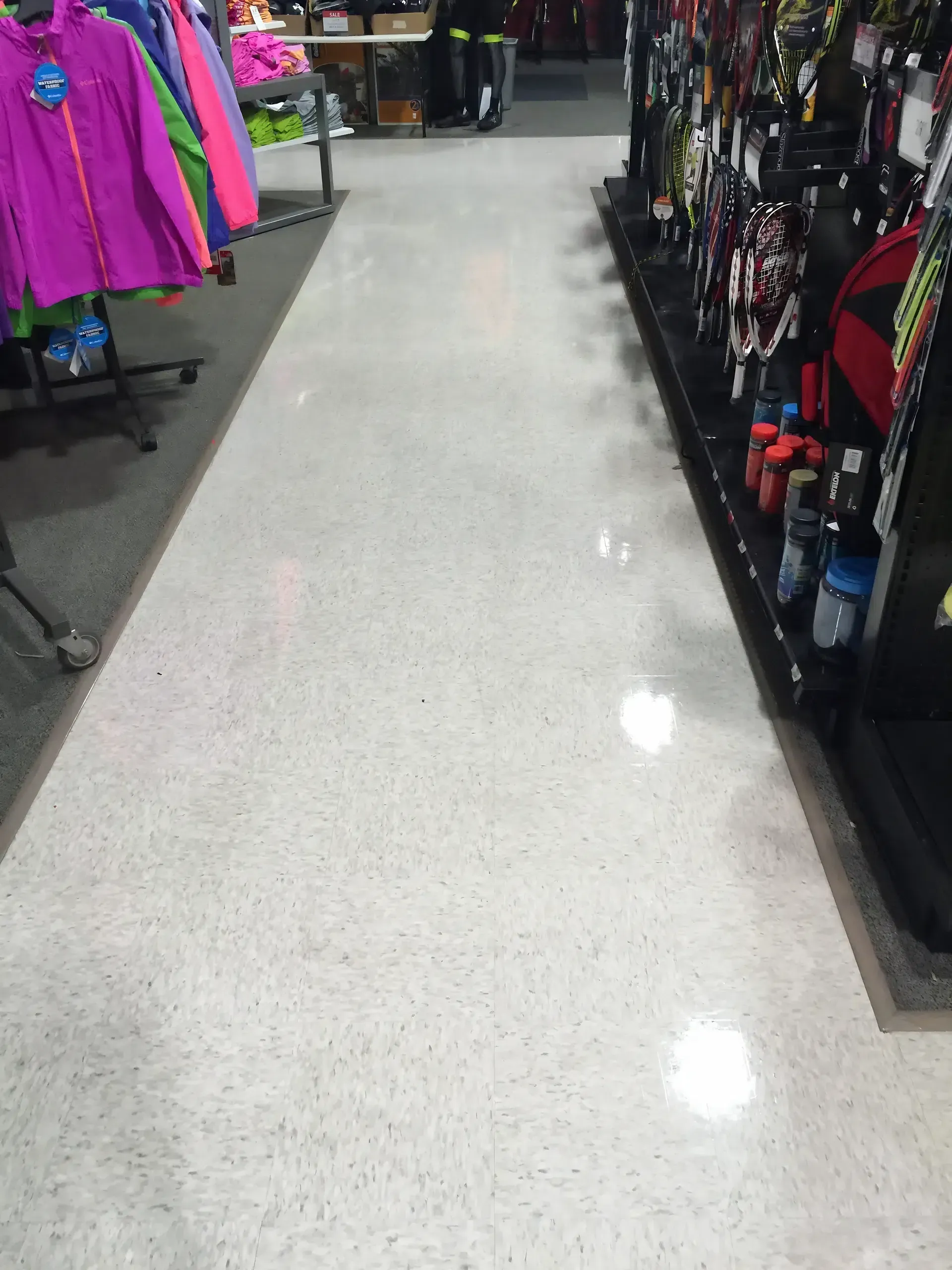
“For 12 years he gave us a little extra every time he burnishes the floor. You can count on him to be on time every time.”
Brad Salow, regional manager, large retail facility, Charleston, S.C.
How often each step comes around
Bar length shows the time between visits, up to one year.
Timeline 0 to 12 months. Burnishing (MyCleanSupplies, 2026). Full strip (Okum Supply, 2025).
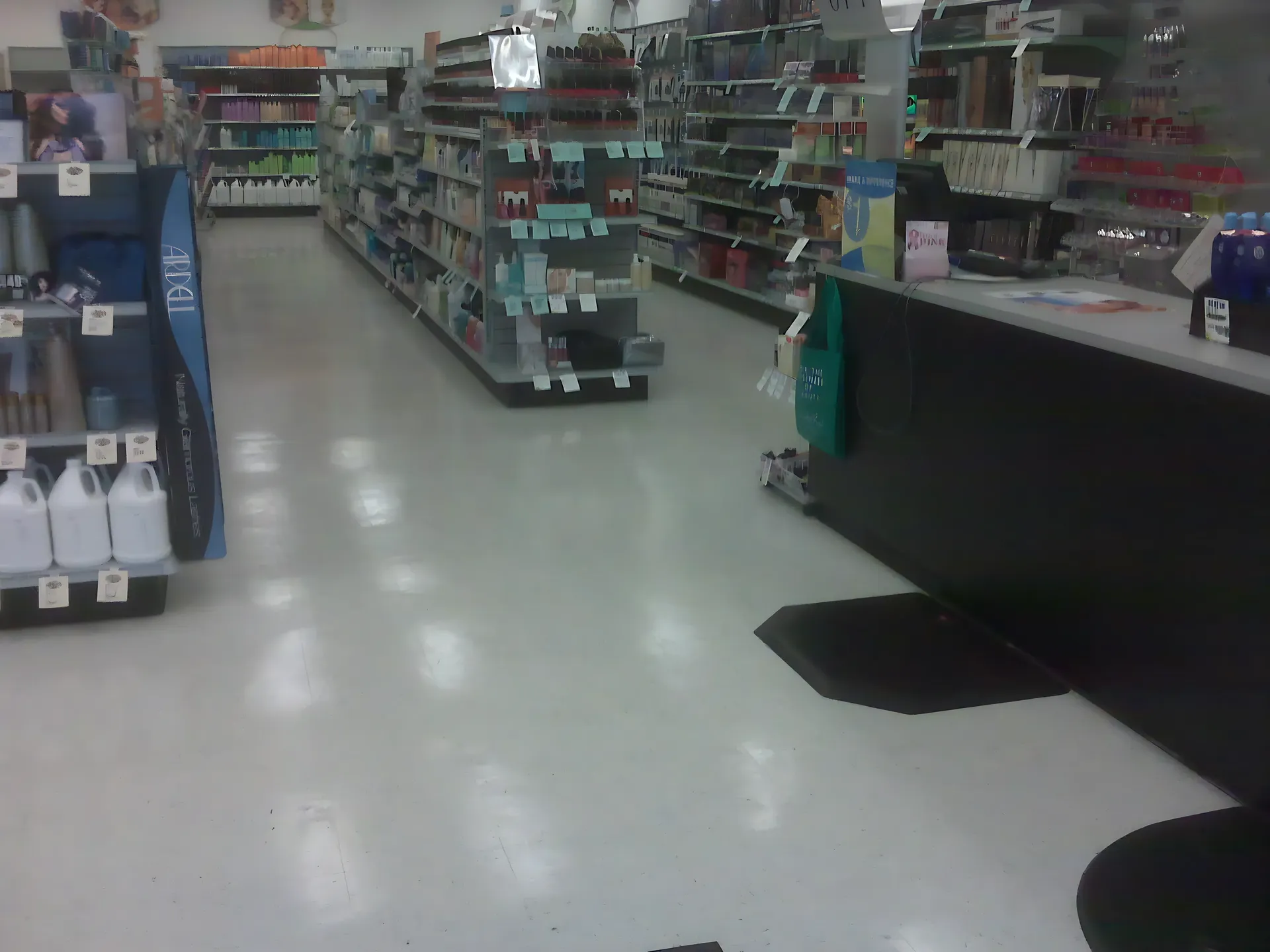
Floor wax does not expire on the floor. It wears. In busy hallways, lobbies and retail aisles, one supplier puts a full strip every 3 to 6 months. Quiet offices and storage rooms may need one once a year (Okum Supply, 2025).
Burnishing stretches that life. One burnishing guide sets it daily in busy retail and healthcare, and every 2 to 3 days in school corridors (MyCleanSupplies, 2026). Unopened finish can go bad in storage, so follow the label.
Updated November 12, 2026Burnish, recoat or strip? Check your floor
Answer question 1
The check points to burnishing, a scrub and recoat or a full strip.
A guide from what you can see. We confirm the scope from two photos or a site walk.
Sources
- Okum Supply, How Often Should You Strip and Wax VCT Floors?. December 12, 2025.
- MyCleanSupplies, Floor Burnishing Techniques. June 8, 2026.