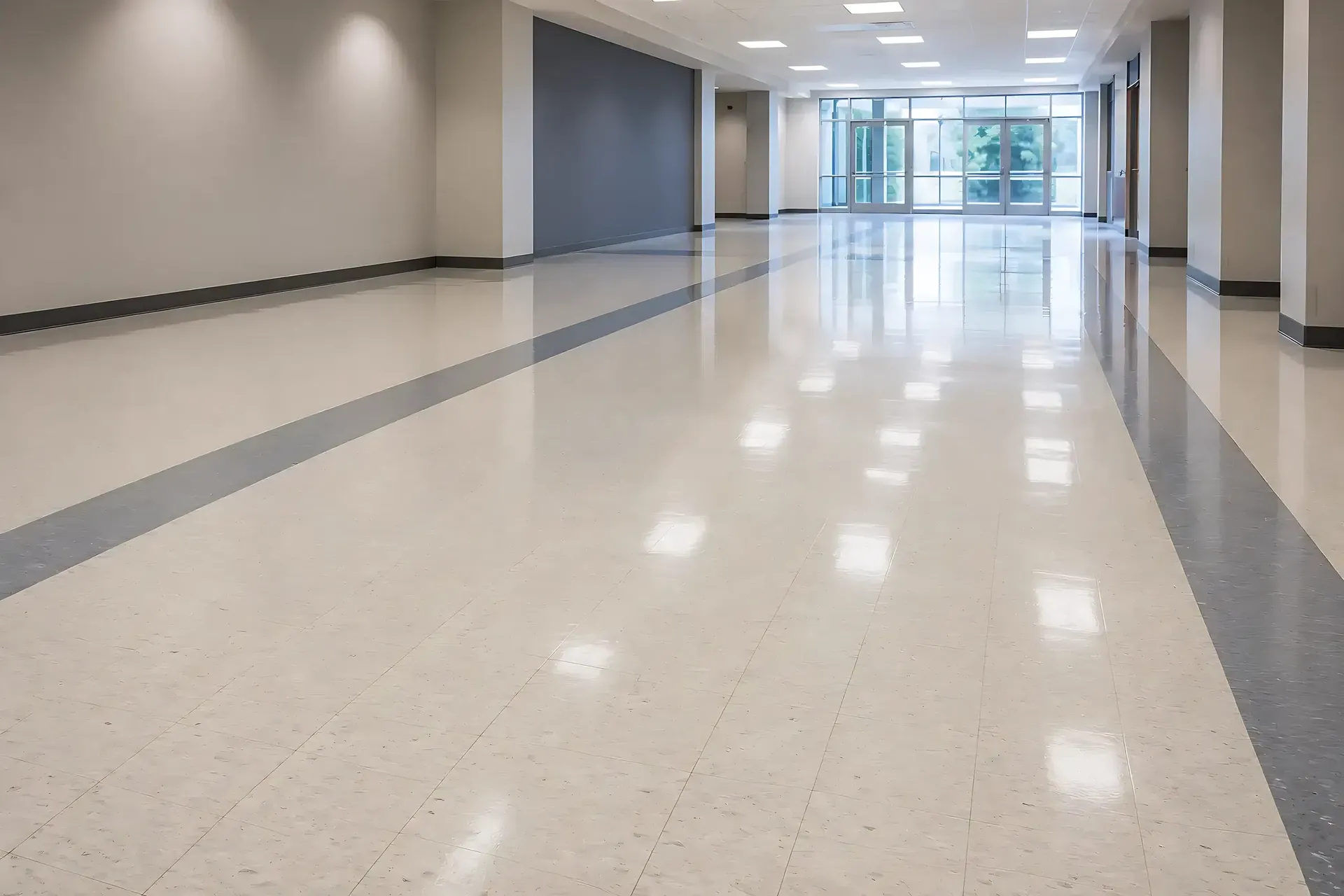


7 Benefits of Regular Floor Waxing for Industrial Floors
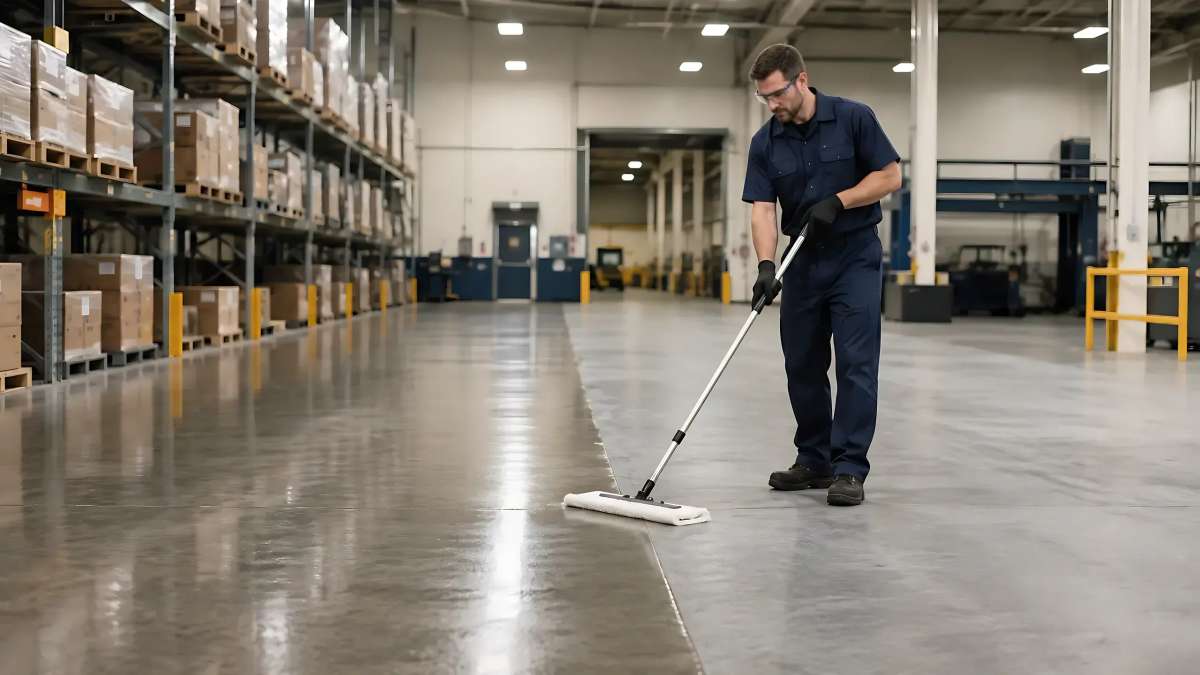
Regular floor waxing can help protect certain industrial and commercial floors, but it is not suitable for every surface.
In professional floor care, “wax” usually means an acrylic or polymer floor finish. This removable finish is applied in thin coats to compatible flooring, creating a renewable wear layer above the original surface.
It is commonly used on vinyl composition tile, or VCT, and may be suitable for some sealed concrete floors. Polished concrete, epoxy coatings, bare concrete, damaged floors, and areas exposed to heavy equipment or chemicals may require a different treatment.
Here are seven practical benefits of maintaining a compatible floor finish in an industrial or commercial facility.
1. Provides a Renewable Wear Layer
Floor finish creates a sacrificial layer that receives routine traffic before wear reaches the underlying flooring.
This can help protect compatible surfaces from:
- Foot traffic
- Carts and rolling equipment
- Minor scuffs
- Abrasive dirt
- Routine spills
- Repeated cleaning
The finish will gradually wear and must be inspected, cleaned, burnished, recoated, or removed as conditions require.
It does not repair cracks, pitting, spalling, loose tiles, or coating failure.
2. Improves the Floor’s Appearance
A properly applied finish can give compatible floors a cleaner and more uniform appearance.
Depending on the product and maintenance method, the finish may provide:
- A low-gloss, satin, or glossy appearance
- More consistent colour
- Fewer visible traffic lanes
- Reduced visibility of minor surface marks
- A more presentable facility for employees and visitors
Waxing cannot conceal significant floor damage. Restoration or mechanical preparation may be necessary when deterioration is extensive.
3. Supports Easier Routine Cleaning
A properly maintained finish can make certain surface contaminants easier to remove during routine cleaning.
The finish provides a layer above the flooring material, helping prevent some dirt and spills from immediately contacting the underlying surface.
However, cleaning results still depend on:
- Prompt spill response
- Correct detergent dilution
- Compatible cleaning products
- Suitable pads and brushes
- Clean mop water
- Properly maintained equipment
- Effective entrance matting
Too much detergent or an unsuitable cleaner may leave residue, damage the finish, or make the floor appear dull.
4. Allows Worn Areas to Be Recoated
One advantage of a removable floor finish is that it may be renewed without replacing the entire floor.
When the existing finish remains properly bonded, worn traffic lanes may be suitable for:
- Deep cleaning
- Scrubbing
- Burnishing
- Preparation and recoating
Complete stripping may be necessary when the finish is peeling, heavily contaminated, discoloured, excessively built up, or no longer responds to maintenance.
Facilities with VCT can learn more about professional VCT stripping and waxing services.
5. Helps Maintain a Consistent Facility Standard
Warehouses, manufacturing facilities, distribution centres, retail operations, and other multi-location businesses may need floors to meet consistent appearance and maintenance requirements.
A documented floor-care program can establish:
- Approved products
- Cleaning procedures
- Inspection points
- Burnishing requirements
- Recoating criteria
- Stripping procedures
- Maintenance records
- Planned service windows
This is particularly useful for facilities that must coordinate work around shifts, weekends, shutdowns, inspections, or customer activity.
TCS Floors offers commercial floor maintenance programs based on actual floor conditions and operating requirements.
6. Helps Facility Teams Identify Wear
A maintained floor is generally easier to inspect than one covered with soil, residue, or failing finish.
Regular inspections may reveal:
- Dull traffic lanes
- Deep scratches
- Exposed flooring
- Peeling or flaking
- Dark finish buildup
- Chemical damage
- Loose or damaged tiles
- Cracks or deteriorated concrete
- Moisture-related problems
These conditions should be assessed before additional finish is applied. Adding new coats over contamination or failing finish can trap dirt and create adhesion problems.
7. May Delay More Extensive Floor Work
Maintaining the finish before it wears through may help reduce direct abrasion to compatible underlying flooring.
This can sometimes delay more extensive refinishing or replacement. However, the result depends on the floor type, traffic, cleaning program, contamination, finish compatibility, and condition of the substrate.
Waxing should not be presented as a guaranteed way to extend the life of every industrial floor. Some surfaces perform better with sealing, polishing, restoration, or a commercial coating system.
Which Industrial Floors Can Be Waxed?
Floor finish may be suitable for:
- VCT floors
- Certain resilient flooring systems
- Some previously finished floors
- Certain sealed or properly prepared concrete surfaces
- Lower-impact areas within industrial facilities
The manufacturer’s requirements and the existing flooring system should always be confirmed before a product is applied.
When Is Floor Waxing Not the Right Treatment?
Waxing may not be appropriate when:
- Forklifts or heavy equipment create severe abrasion
- Oil or chemicals have penetrated the concrete
- The floor is mechanically polished
- An epoxy or resinous coating is already installed
- Moisture is causing adhesion failure
- Concrete is cracked, pitted, or spalling
- The existing finish is unidentified or incompatible
- The facility cannot support periodic maintenance
- The floor needs significant mechanical correction
Depending on the condition, an industrial floor may require:
- Concrete floor scrubbing
- Concrete floor grinding
- Concrete floor restoration
- Concrete floor sealing
- Concrete floor polishing
- Concrete floor coatings
How Often Should Industrial Floors Be Waxed?
There is no standard schedule for every industrial facility.
Maintenance frequency depends on:
- Floor type
- Pedestrian traffic
- Equipment traffic
- Type and number of finish coats
- Soil and chemical exposure
- Cleaning frequency
- Facility operating hours
- Required appearance
- Condition of the existing finish
Some areas may only need cleaning or burnishing. Others may require recoating or complete stripping and refinishing.
The floor should be inspected before more finish is applied.
Get the Right Treatment for Your Industrial Floor
Regular floor waxing can provide a renewable wear layer, support routine cleaning, and maintain a consistent appearance when it is used on a compatible surface.
It should not be applied automatically to every industrial floor.
TCS Floors provides industrial floor cleaning and restoration services for warehouses, manufacturing plants, distribution centres, and other commercial facilities across the United States.
Commercial and industrial facilities only. Residential floor services are not provided.
Request an instant quote or call 866-607-8659 to discuss your facility.
Frequently Asked Questions
What are the benefits of industrial floor waxing?
On compatible floors, a commercial finish can provide a renewable wear layer, improve appearance, support routine cleaning, and allow worn areas to be recoated before the underlying flooring is exposed.
Can concrete industrial floors be waxed?
Some sealed or properly prepared concrete floors can accept a compatible finish. Bare, polished, coated, contaminated, damaged, or moisture-affected concrete may require another treatment.
Does waxing make an industrial floor slip-resistant?
Waxing does not automatically make a floor slip-resistant. Performance depends on the floor, finish, application, cleaning procedures, contamination, and environmental conditions. Only compatible products should be used according to their technical specifications.
Does floor wax repair scratches or cracks?
No. Floor finish may make minor surface marks less visible, but it does not repair cracks, pitting, spalling, loose tiles, or structural damage.
How often should an industrial floor be stripped and waxed?
There is no universal schedule. The correct interval depends on traffic, floor type, contamination, cleaning methods, finish condition, and facility requirements. Inspection should determine whether the floor needs cleaning, burnishing, recoating, or complete stripping.