
Floor services are the cleaning, maintenance and restoration jobs a contractor performs on the floors of a commercial building. They run from daily cleaning to burnishing, scrub and recoat, strip and wax, concrete scrubbing, sealing and polishing, and each one has a specific job to do.
The skill is picking the right one for the floor in front of you. The wrong service costs you downtime and does little for the floor. The right one, at the right time, protects the surface and the way it looks.
Floor services at a glance
Here is how the main commercial floor services line up, from lightest to heaviest.
- Daily cleaning: sweeping, dust mopping and wet cleaning or machine scrubbing to remove loose soil.
- Burnishing and buffing: polishing the finish to bring back gloss.
- Scrub and recoat: deep cleaning of the finish, then a fresh protective layer.
- Strip and wax: removing the old finish completely and applying new.
- Concrete scrubbing: machine cleaning of unfinished or sealed concrete.
- Sealing and polishing: protecting and finishing concrete or hard surfaces.
Most buildings use several of these on different cycles. The goal is to push the heavy services as far apart as you can without letting the floor fail.
Daily floor cleaning and maintenance
Daily cleaning is the base of every floor care program. It removes grit before it grinds into the finish. Grit does more damage to a floor than any single job on this list.
The method varies by space. Dust mopping and sweeping handle dry soil. Wet mopping suits small areas.
Machine scrubbing suits larger floors such as stores, warehouses, school halls and plants. Good commercial floor cleaning services set the method for each area, not one routine for the whole building.
Daily cleaning is the right call when floors look clean after a pass. It is not the right call when a floor has lost its shine or holds dirt in the finish. Cleaning more often will not fix that.
Burnishing and buffing
Burnishing uses a high-speed machine and a pad to polish a hard finish. It brings back gloss and smooths scuffs. Buffing is the lower-speed version, used for light refreshing between heavier jobs.
Both suit floors that still have a sound finish. A burnished floor reflects more light and hides foot traffic better, which matters in retail, lobbies and corridors.
Do not burnish a floor with a worn or dirty finish. You will polish the dirt in. Scrub it first, and recoat if the finish has thinned.
Scrub and recoat
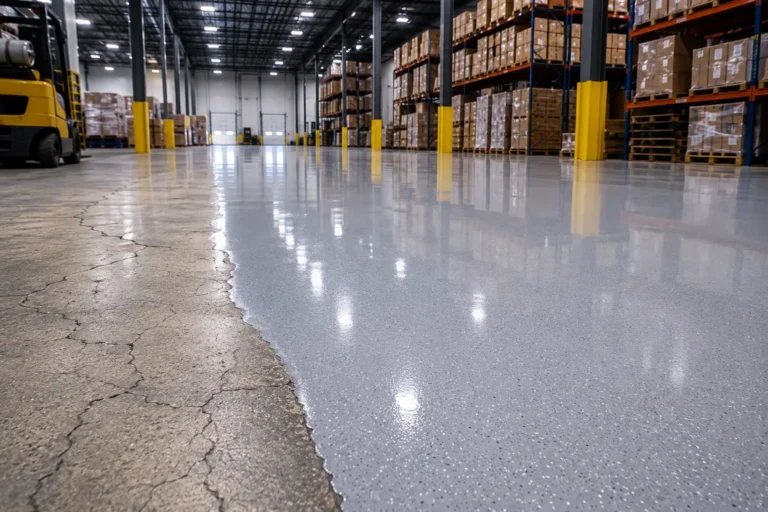
Scrub and recoat is a deep clean of the existing finish, followed by a fresh coat of finish. Machines lift embedded soil and surface scuffs, and the new layer protects the floor again.
This is the right call when the floor is sound but looks dull or dirty after normal cleaning. It is faster and less disruptive than a full strip, and it keeps the existing finish in good condition.
It is the wrong call when the finish has yellowed, peeled or built up too thick. New finish on top of a failing layer only hides the problem for a short time.
Strip and wax
Strip and wax removes the old finish down to the bare floor and applies new finish. It is the reset button for resilient floors such as vinyl composition tile.
High-traffic areas may need it every 6 to 12 months, while less frequented spaces may require less. Between strips, scrub and recoat and burnishing extend the life of the finish.
Choose a strip when the finish is yellowed, cracked, peeling or stained in ways a scrub cannot reach. Do not strip a floor just because it is dirty. Stripping is the most disruptive of the finish services, so use it when nothing lighter will work.
Concrete scrubbing, sealing and polishing
Concrete floors in warehouses, plants, garages and back-of-house areas need a different approach. They do not carry a wax finish, so they are cleaned, sealed and polished instead.
Concrete scrubbing
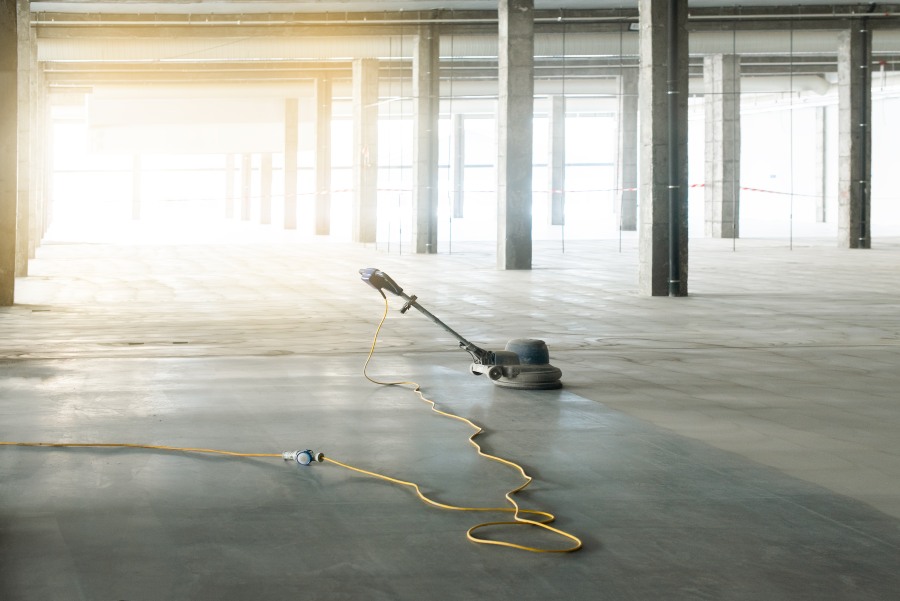
Machine scrubbing removes oil, tire marks and ground-in dirt that mops cannot lift. It suits floors with a worn or open surface.
Sealing
A sealer closes the pores of the concrete and makes it easier to clean. It is a good choice when concrete keeps absorbing spills or kicking up dust.
Polishing
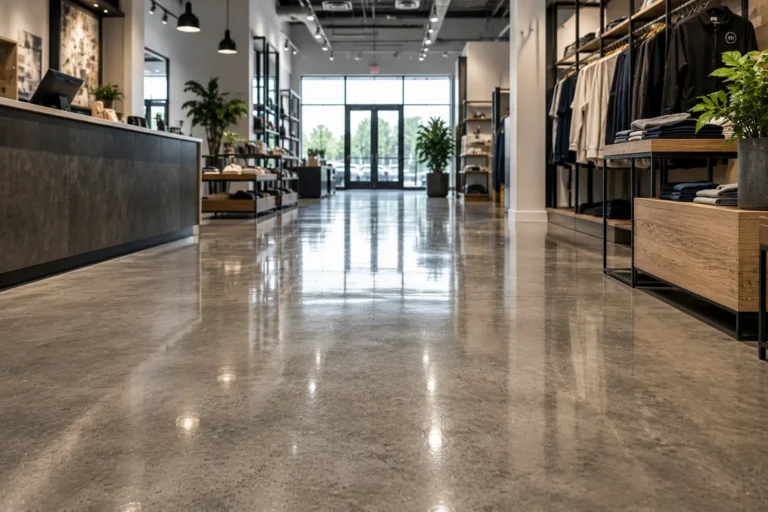
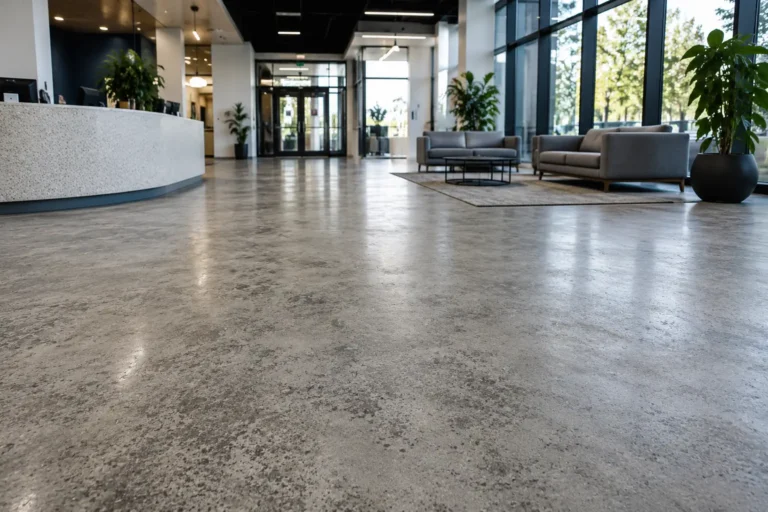
Polishing grinds and finishes the surface to a smooth, reflective look. It lowers upkeep once done, and suits showrooms, retail floors and open lobbies.
Common mistakes when buying floor services
The most common mistake is buying on habit. A building strips its floors every year because it always has, even when a scrub and recoat would do. Another is skipping the heavy service until the finish fails, which makes the fix larger and the downtime longer.
Other mistakes to avoid:
- Applying finish to concrete or to floors that were never meant to carry it.
- Burnishing over dirt instead of scrubbing first.
- Treating every area the same, when an entrance and a storage room wear very differently.
- Asking for a price per service without an inspection of the floor.
A short written scope for each area fixes most of this. It names the floor type, the service, the cycle and who signs off.
How to choose the right floor service
Match the service to what you see on the floor, not to a calendar. Use this rule of thumb.
- Floor is clean but dull: burnish or buff.
- Floor is dirty and the finish is still sound: scrub and recoat.
- Finish is yellowed, cracked, peeling or built up: strip and wax.
- Concrete is stained, dusty or absorbing spills: scrub, then seal.
- Concrete needs a finished look and lower upkeep: polish.
Traffic sets the pace. Entrances, checkouts, corridors and loading routes wear fastest and need more attention. Low-traffic rooms can wait.
When you are unsure, have a contractor inspect the floor. A short walk-through with photos usually answers the question.
If you run several sites, one program can cover them all. See commercial floor care by state for where we work.
Planning the work in your building
For a quote, send the square footage, photos of each floor type, notes on current problems and the hours crews can work. The more detail you give, the closer the first quote will be to the final scope.
TCS Floors schedules night and weekend work, so your building stays open and your customers or staff are not in the way. We build customized maintenance programs that place each service on the right cycle for your floors.
TCS Floors is commercial only and works nationwide, with 33+ years in the business. Send us your details and we will propose a program.
Frequently asked questions
What is floor service?
Floor service is the cleaning, maintenance and restoration work done on the floors of a building. In a commercial setting it covers daily cleaning, burnishing, scrub and recoat, strip and wax, concrete scrubbing, sealing and polishing.
What are the different types of floor cleaning and maintenance?
They run from light to heavy. Daily cleaning and burnishing keep a sound floor looking good. Scrub and recoat refreshes the finish.
Strip and wax resets it. Concrete floors use scrubbing, sealing and polishing instead.
What is the difference between scrub and recoat and strip and wax?
Scrub and recoat cleans the existing finish and adds a fresh layer on top. Strip and wax removes the old finish entirely before new finish goes on. Choose scrub and recoat when the finish is sound and strip and wax when it has failed.
How often should floor care services be done?
It depends on traffic and floor type. High-traffic areas may need strip and wax every 6 to 12 months, while less frequented spaces may require less. Daily cleaning keeps the heavier jobs further apart.
When should concrete floors be sealed or polished?
Seal concrete that keeps absorbing spills or giving off dust. Polish it when you want a finished look and easier upkeep. Scrub it first, because sealing over dirt locks the dirt in.