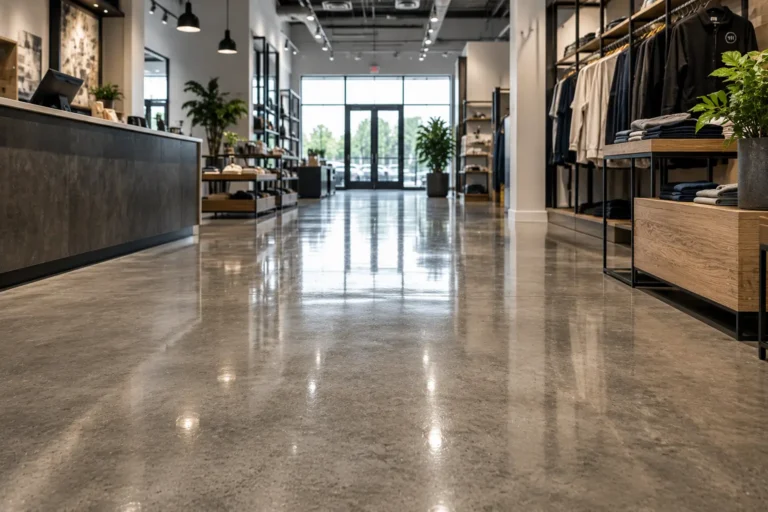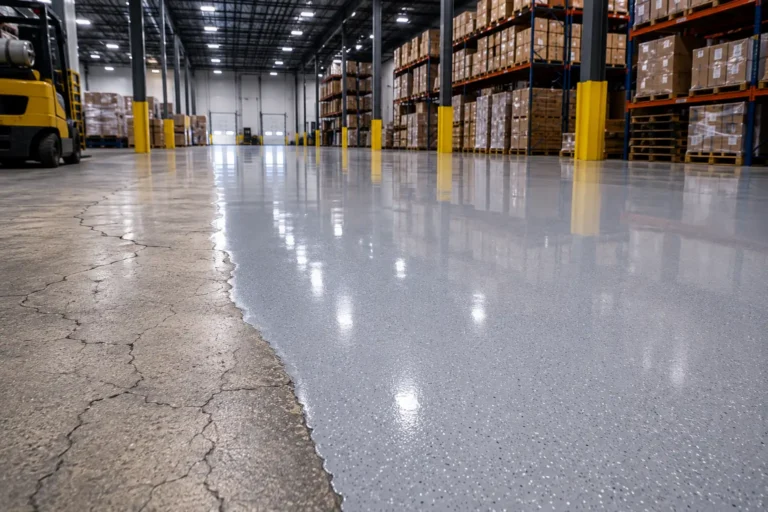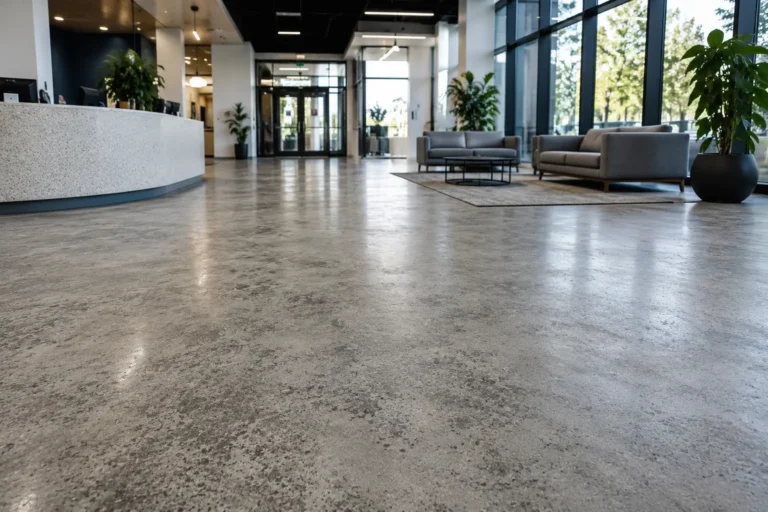


In Columbus, Ohio, the floor problem starts at the door. Winter salt, slush and wet boots carry grit into lobbies, corridors and sales floors, and that grit does more damage than daily foot traffic. The fix is a scheduled program of scrubbing, recoating and periodic resets, run at night or on weekends so the building stays open.
TCS Floors serves Columbus facilities as part of its nationwide coverage, with 33+ years in commercial floor care. To get started, send your floor types, square footage, photos and working hours.
The buildings and floors in Columbus
The federal numbers show a metro area with a lot of public-facing floors. The Columbus, Ohio metro area has 5,594 retail establishments and 4,869 food and lodging establishments. In each, the entrance is where the weather first meets the floor.
Health care leads the group, with 6,208 health care establishments in the Columbus, Ohio metro area. Franklin County also has 17 Medicare-registered hospitals. Those facilities run long hours and need floors that stay even, clean and safe underfoot.
Education is a major part of the picture. Franklin County has 373 operating public schools, and each one has long corridors, cafeterias and gyms. Their floors run on the school calendar, which makes planning ahead more important than any single product.
There are also 319 warehousing and storage establishments in the Columbus, Ohio metro area. Their concrete floors take wheel traffic and, in winter, the same salty slush that reaches the stores and schools.
Winter salt, snow and the floor finish
Ohio winters leave a white film on dark floors and a gritty layer on light ones. Salt also breaks down floor finish, and fine grit scratches it. A floor that looks fine in November can look worn by February.
Plan for it with three habits. Use matting at every entrance and change it often.
Run a routine scrub in the wet months, not only in the dry ones. Book a recoat or a reset for early spring, once the salt season ends.
Our commercial floor cleaning services follow this seasonal pattern. A customized maintenance program can set the routine for each season, so you are not rescuing a floor after the damage is done.
Entrances, lobbies and sales floors
The first few steps inside a door take the most abuse. That is where salt is dropped, water pools and the finish wears through first. Treat the entrance zone as its own area, with a tighter routine than the rest of the floor.
In retail and food service, a clean entrance tells customers the whole building is cared for. In offices and schools, it protects the floors further in, because less grit travels down the hall. In every case, keeping grit out is easier than removing it.
Walk your entrances after a wet day. Look for standing water, white film, dull lanes and worn edges. Photos of those spots speed up the quote and sharpen the scope.
If you manage several buildings, compare their entrances side by side. The one with the worst wear usually shows where your program needs work first.
Which floor services Columbus buildings need
- Scrub and recoat: the main winter tool for lobbies, school halls and sales floors with a sound finish.
- Strip and wax: the spring reset when salt has worn through the finish. See commercial VCT strip and wax for the process.
- Burnishing: keeps gloss up in busy corridors between recoats.
- Concrete scrubbing and sealing: for warehouse floors, docks and back rooms that hold salt and oil.
- Polishing: a durable option for concrete in the right condition. Compare it with commercial concrete polishing before you decide.
Strip only when the finish has failed. If it is sound, a scrub and recoat does the job with less downtime.
Schools, hospitals and the Franklin County calendar
With 373 public schools in Franklin County, summer is a crowded season for floor work. Book early, send room-by-room photos and group the big jobs so one visit covers many areas. Leave time for the finish to set before staff and students return.
Health care adds its own load, with 6,208 health care establishments across the metro area. Hospital and clinic floors cannot wait for summer.
Their work moves in zones through the night, with the busiest corridors kept open. Ask your contractor to show how work areas will be marked and how the path stays clear.
How to choose a commercial floor contractor in Columbus
Skip the lists. Use criteria you can check, and ask for each in writing.
- A scope that names each floor type and what will be done to it.
- A commercial-only focus.
- Night and weekend scheduling that fits your hours.
- A winter plan: entrance care, a wet-season routine and a spring reset.
- Reach beyond one city. See commercial floor cleaning across Ohio and commercial floor care in Cincinnati if you manage more than one site in the state.
- A photo review or site walk before the final quote.
Scheduling around your operations
Retail and offices clear in the evening. Hospitals and hotels never clear, so work moves in sections. Warehouses go by shift, so the gap between shifts or a weekend is the window.
Give the contractor your peak days and your quiet days, and any events that bring extra traffic and weather indoors. Heavy wet work belongs in the quietest window. Light maintenance can fit into the edges of the working day.
Planning the work in your building
For a quote, send floor types, square footage, photos of each area and your working hours. Mark the entrances and any areas that must stay open. Note where salt and grit collect.
TCS Floors schedules nights and weekends and builds customized maintenance programs around your traffic and your seasons. We work on commercial buildings only and across the country.
Keep a short log of each service with the date, the area, the method and a photo. Over a full winter it shows which entrances and corridors wear fastest, and that tells you where to put the routine and the budget.
Review the log in early spring with your contractor. Decide which floors need a recoat, which need a full reset and which can wait a season. That one meeting turns a hard winter into next year’s plan.
Where the numbers come from
Metro-area establishment counts come from the U.S. Census Bureau, County Business Patterns 2023.
School counts come from the National Center for Education Statistics, Common Core of Data 2023, via the Urban Institute Education Data Portal. Hospital counts come from the Centers for Medicare & Medicaid Services, Hospital General Information, updated July 22, 2026.
Frequently asked questions
How do I get commercial floor cleaning scheduled in Columbus, Ohio?
Send your floor types, square footage, photos and working hours. Mark entrances and areas that must stay open. TCS Floors then proposes a night or weekend schedule.
How does winter salt damage commercial floors?
Salt leaves a film and breaks down floor finish, and the grit that comes with it scratches the surface. Matting, a wet-season scrub routine and a spring recoat or reset limit the damage.
How do I choose a commercial floor cleaning company in Columbus?
Ask for a written scope by floor type, an after-hours plan, a winter maintenance plan and a photo review or site walk. Compare those answers.
When should schools book floor work?
Book early for summer break and holidays. Schools compete for the same windows, so send photos and a room list well ahead.
Can floor work happen while a clinic or hotel stays open?
Yes. Work moves through the building in marked sections at night or on weekends, with a clear path kept open.